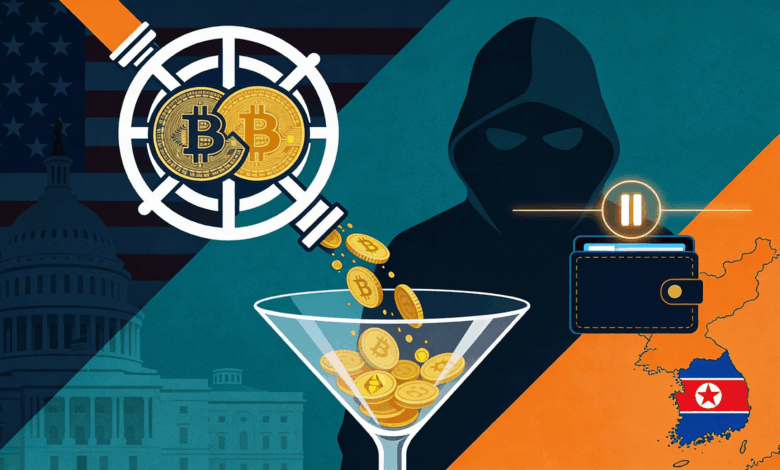
Innovative Solutions for Crypto-Enabled Illicit Finance
The U.S. Treasury Department recently presented a comprehensive 32-page report to Congress, following the directives of the GENIUS Act. This report delves into innovative strategies to combat crypto-enabled illicit activities, while recognizing the legitimate use of these digital tools for privacy.
The Privacy and Regulation Paradox in Cryptocurrency
In the March submission, the Treasury acknowledged the lawful employment of crypto mixers. These services, designed to enhance privacy by intermingling cryptocurrencies, offer legitimate users a way to protect sensitive financial data from public scrutiny. However, the Treasury also highlighted the necessity for a new legal framework to curb the misuse of such tools for illicit purposes.

Advertisement Banner
Crypto Mixers: Balancing Privacy and Security
Mixers and similar privacy-enhancing technologies are praised for their ability to shield personal wealth, business dealings, and charitable donations from public eyes. Nonetheless, the report underscores that these tools are also exploited by North Korean cyber units and major ransomware groups to launder stolen digital assets. The document details how billions of dollars are funneled through mixers, ultimately converted into stablecoins, and then cashed out, underscoring the dual nature of these technologies.
The Proposed “Hold Law” for Digital Assets
To address these challenges, the Treasury’s report advocates for a “hold law” specifically tailored to digital assets. This legislation would empower crypto exchanges and platforms to temporarily freeze suspicious transactions, enabling law enforcement to intervene more effectively. The proposal aims to balance privacy rights with the need to prevent and prosecute crime, ensuring that only high-risk transactions are subject to scrutiny.
Mixers in the Financial Ecosystem
Traditionally, financial systems and mainstream media have linked mixers with money laundering activities. Tornado Cash serves as a notable example of this perception. However, prominent figures like Ethereum co-founder Vitalik Buterin argue that mixers are neutral tools. Buterin has even utilized Tornado Cash for private donations and supports new, compliant designs like Privacy Pools, which aim to enhance on-chain privacy without enabling illicit activities.
Integrating the GENIUS Act Framework
This report is a vital component of the GENIUS Act, which was signed into law to establish a federal framework for payment stablecoins and leverage innovative tools against illicit finance. The Treasury is tasked with outlining how technologies like AI, digital identity, and blockchain analytics should be integrated into a risk-based anti-money laundering (AML) strategy.
The report recommends a preferred technological infrastructure, including AI, digital identity solutions, blockchain analytics, and APIs, for regulated platforms to effectively manage risks associated with digital assets.
Editorial Integrity and Process
At Bitcoinist, delivering content that is thoroughly researched, accurate, and unbiased is a top priority. Our stringent sourcing standards and rigorous editorial process are designed to ensure that every piece of content is reviewed by our team of technology experts and seasoned editors. This commitment guarantees the integrity, relevance, and value of the information we provide to our readers.