
Ripple’s Global Financial Integration: A Strategic Vision
Understanding Ripple’s Strategic Approach

Advertisement Banner
Ripple’s enduring vision is to integrate its advanced technology into the global financial framework incrementally, enhancing various financial functions worldwide. This methodical approach, as detailed by Phil and Dom Kwok, co-founders of the Easy app, was discussed extensively during their recent appearance on the Paul Barron Show. The Kwok brothers elaborated on what they termed “the Ripple strategy,” emphasizing Ripple’s focus on embedding XRP Ledger-based infrastructure within existing institutional operations instead of trying to replace them.
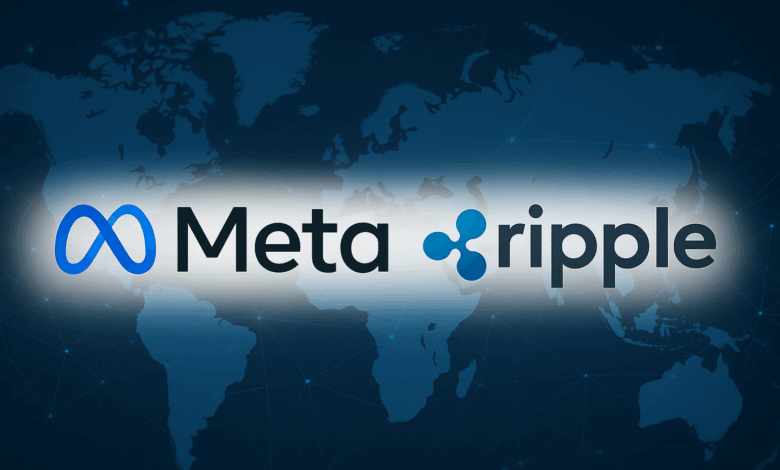
Ripple’s Acquisition Strategy: Inspired by Meta
Dom Kwok elaborated on Ripple’s strategic acquisitions, including companies like Metaco, Standard Custody, and Hidden Road, highlighting their roles in brokerage, treasury, and stablecoin sectors. He argued that these acquisitions collectively reveal Ripple’s ambition rather than any single transaction. Dom explained, “Ripple aims for the XRP ledger to deeply integrate into the entire global financial infrastructure.” He further added, “With acquisitions like Hidden Road for brokerage, G-Treasury for treasury management, and Rail for stablecoin solutions, Ripple’s cohesive strategy becomes increasingly evident as these elements converge.”
Dom drew a parallel with major tech corporations expanding through strategic acquisitions, similar to Meta’s acquisitions of Instagram and WhatsApp. This analogy illustrates how seemingly independent brands can operate on a unified underlying platform, a strategy Ripple seeks to replicate within the financial sector.
The Ripple Strategy: A Long-Term Vision
During the discussion, host Paul Barron probed whether Ripple’s recent initiatives reflect a coherent long-term strategy. Phil Kwok highlighted the continuity of Ripple’s incremental, institutional approach without disclosing unreleased information. He emphasized, “Ripple’s strategy has always deviated from the traditional cypherpunk ideology. Instead, we’ve focused on collaborating with existing financial systems.”
Phil contrasted Ripple’s approach with Bitcoin’s cypherpunk roots, stating, “Ripple’s foundation is about building upon existing systems. As Chris Larsen often emphasizes, significant technological shifts build on their predecessors.” This underscores Ripple’s commitment to interoperability with financial institutions rather than replacing them. “Our focus has been on collaboration with banks rather than sidelining them,” Phil explained.
Ripple’s Future in Global Finance
Phil Kwok articulated Ripple’s goal to integrate seamlessly with banks and financial institutions, emphasizing collaboration. “We are working alongside banking institutions,” he stated. “Ripple’s recent strategic moves highlight our dedication to solidifying our role in the global financial architecture, a commitment we’ve pursued for over a decade.”
Dom Kwok summarized this vision as creating an ecosystem where every interaction within the global financial infrastructure indirectly engages with Ripple’s technology. At the time of publication, XRP was trading at $2.40.
Editorial Standards and Commitment
Our Editorial Process at Bitcoinist prioritizes delivering well-researched, accurate, and unbiased content. Our rigorous sourcing standards and thorough reviews by top technology experts and seasoned editors guarantee the integrity, relevance, and value of our content for our readers.