

Exploring the Ripple Effect: Bitcoin vs. Altcoins
Our editorial team is committed to providing trustworthy content, meticulously reviewed by leading industry experts and experienced editors.
The Controversial Role of Ripple and XRP in the Crypto Landscape
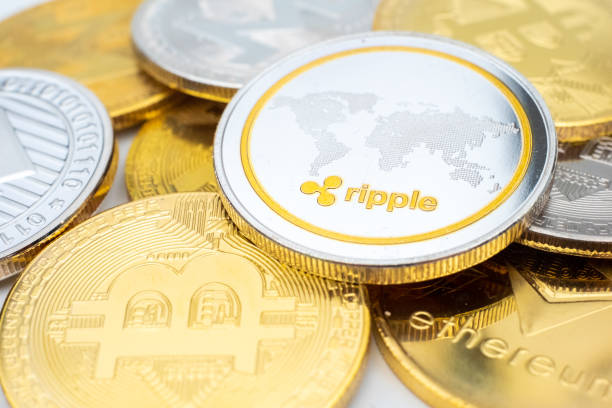
Simon Dixon, a staunch Bitcoin advocate and the founder of BnkToTheFuture, has sparked renewed discussions regarding the influence of altcoins, particularly Ripple and XRP, on Bitcoin’s original mission. In a bold critique, he labeled XRP as a psychological operation or “psyop,” arguing that the frequent necessity to delineate its differences from Bitcoin has sown discord within the crypto community.

Advertisement Banner
Ripple and XRP: A Distraction from Bitcoin’s Core Vision
In a recent discussion on the BTC Sessions podcast, Dixon delved into various factors, key historical events, and notable figures in the financial sector that have significantly influenced Bitcoin’s trajectory. He identified the rivalry between XRP and Bitcoin as a major disruption, which he believes has fractured the Bitcoin community. Dixon emphasized that altcoins, often referred to as “shitcoinery,” along with speculative trading, have diverted investor attention from Bitcoin’s fundamental purpose as a decentralized financial system.
Dixon argued that XRP’s rise created lasting divisions within the Bitcoin ecosystem by diverting focus from Bitcoin’s decentralized vision. The ongoing debate to clarify the differences between XRP and Bitcoin, he noted, has led to investor confusion and internal community rifts.
Historical Setbacks and Their Impact on Bitcoin
Beyond XRP, Dixon pointed to the collapse of the Mt. Gox exchange in 2014 as a pivotal setback that undermined trust among Bitcoin holders. He described Mt. Gox’s downfall as a calculated attack, noting how hacking incidents and the loss of substantial BTC amounts from the now-defunct platform severely damaged Bitcoin’s reputation during its formative years, almost derailing the cryptocurrency’s progress.
Bitcoin’s Evolution Through Controversies and Conflicts
Dixon also revisited the heated block-size debate that led to significant network splits, giving rise to Bitcoin Cash (BCH) and subsequently Bitcoin SV. These hard forks highlighted profound disagreements over Bitcoin’s scalability, governance, and future trajectory. Each controversy, Dixon asserted, fragmented the Bitcoin community, redirecting efforts towards rival initiatives instead of fostering a unified movement.
He further suggested that key figures like Brock Pierce, co-founder of Tether, might have played roles in these divisive events, contributing to the fragmentation of Bitcoin’s ecosystem. Dixon even alluded to possible historical connections involving Jeffrey Epstein, proposing that controversial networks might have intersected with early crypto developments. While his assertions remain conjectural, Dixon portrayed these instances as part of a recurring strategy to weaken Bitcoin’s momentum and hinder the broader growth of the crypto sector.
Bitcoin’s Resilience Amidst Challenges
Despite these internal conflicts, Bitcoin has demonstrated resilience, emerging stronger as adoption, market value, and institutional recognition continue to grow. It remains the leading cryptocurrency, boasting a market capitalization of approximately $1.35 trillion.
Our Editorial Commitment
At Bitcoinist, our editorial process is dedicated to delivering well-researched, accurate, and unbiased content. We adhere to rigorous sourcing standards, and every piece of content undergoes thorough review by our team of top technology experts and seasoned editors. This meticulous process ensures the integrity, relevance, and value of our content for our readers.
“`