Insights from Cardano’s Charles Hoskinson on Liqwid’s Governance Controversy
In the dynamic world of decentralized finance (DeFi), governance issues frequently arise, challenging the integrity and fairness of decision-making processes. A recent instance involving Liqwid has drawn attention from none other than Charles Hoskinson, the founder of Cardano. Hoskinson’s intervention underscores a critical DeFi governance concern: the potential conflict of interest when insiders influence outcomes that might benefit them.
Charles Hoskinson Advocates for Transparent Decision-Making in Liqwid’s Governance Issue
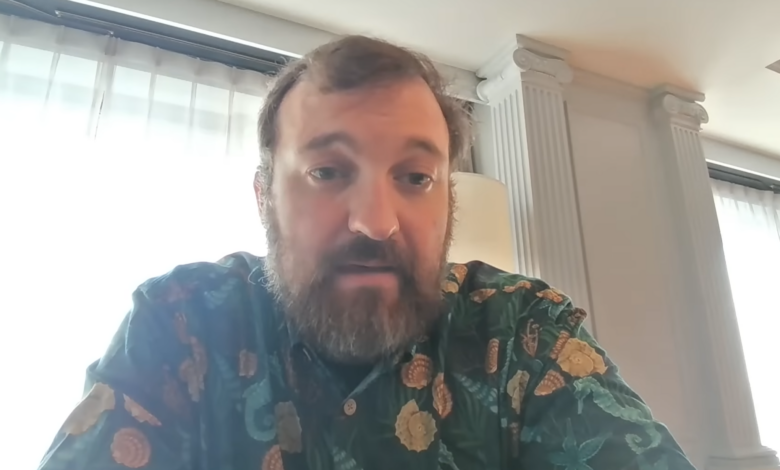
During a livestream from Wyoming, Hoskinson discussed his general tendency to stay out of Cardano’s DeFi ecosystem unless a significant community mandate necessitates his involvement. However, he perceived the Liqwid situation as a more profound issue of trust. In October, there were assurances that “100% of the assets in the smart contracts” would be returned to their rightful owners, a promise now in question.

Advertisement Banner
The controversy revolves around a substantial allocation of Midnight’s NIGHT tokens linked to Liqwid’s ADA market. Currently, this allocation amounts to approximately 18.81 million NIGHT tokens, valued at nearly $1 million in today’s market. This is not a mere symbolic gesture; it is a significant financial matter that demands careful consideration.
Hoskinson Calls for a Revote on Liqwid’s Asset Distribution
Hoskinson highlighted that the Liqwid team encountered a governance and legal dilemma within the DAO’s framework. “It appears the team lacked the legal authority, as per their DAO’s user agreement, to execute the allocation,” he noted. More concerning, however, was how the situation was managed thereafter.
His solution? Conduct another vote with clearer and more transparent terms. “When approaching the DAO for a decision, two things must be ensured,” Hoskinson stated. “First, insiders should step aside if they stand to gain from the governance action. Second, the focus should be on whether to honor previous marketing commitments.”
The Importance of Legitimacy in DAO Governance
Hoskinson stressed that the legitimacy of DAOs stems from widespread participation and trust that the process is unbiased. “Participation is the cornerstone of DAOs’ legitimacy,” he asserted. “If control appears to rest with a select insider group, the DAO’s governance lacks credibility.”
He recommended that insiders publicly disclose their holdings, recuse themselves, and allow token holders to decide on honoring the October commitments. If the community agrees, the protocol should proceed accordingly. Conversely, if the community disagrees, a secondary debate on alternative allocations can ensue.
Potential Consequences of Ignoring Public Trust
Hoskinson was candid about the repercussions of disregarding public trust. He acknowledged his lack of authority to reverse outcomes or control assets within smart contracts. However, he cautioned that the perception of trust violation could severely impair Liqwid’s future prospects.
“The damage to public trust, or even its perception, can significantly hinder Liqwid’s growth and success,” he warned. “If stakeholders lose faith in the core team’s statements and voting processes, they may seek alternative solutions.”
In conclusion, Hoskinson emphasized that Liqwid can still regain credibility, but it requires transparency, recusal, and an unbiased voting process.
Editorial Standards at Bitcoinist
Editorial Process: At Bitcoinist, our editorial process prioritizes delivering meticulously researched, accurate, and impartial content. We adhere to rigorous sourcing standards, ensuring each piece undergoes a thorough review by our team of top-tier technology experts and seasoned editors. This commitment guarantees the integrity, relevance, and value of our content for readers seeking trustworthy information.