

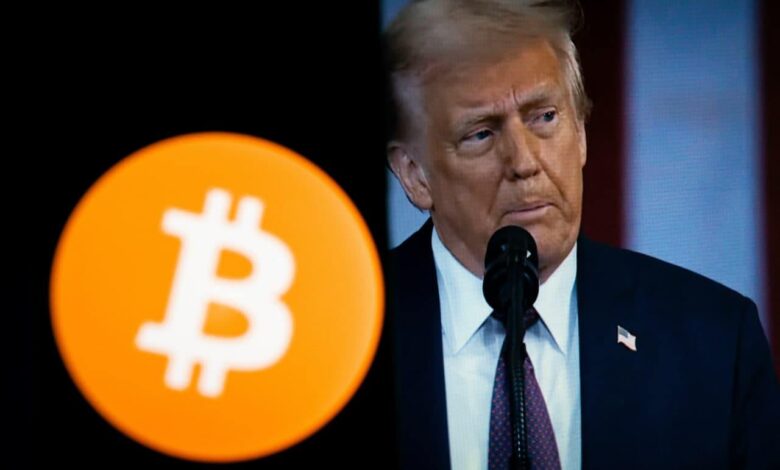
The Impact of Donald Trump’s 2024 Re-Election on the Cryptocurrency Industry
A Shift in Political Climate: Embracing Cryptocurrency
The re-election of Donald Trump in 2024 marked a significant turning point for the cryptocurrency sector, signaling the arrival of what many consider the first genuinely pro-crypto administration in the United States. This embrace of digital assets, however, was a noticeable departure from Trump’s earlier skepticism towards Bitcoin (BTC) and similar cryptocurrencies.
Trump’s Initial Opposition to Bitcoin

Advertisement Banner
During his first term as President, Donald Trump was outspoken in his criticism of Bitcoin. In a widely circulated 2019 tweet, Trump dismissed BTC as ‘based on thin air,’ expressing deep skepticism about its legitimacy. Despite these strong words, cryptocurrency traders showed resilience, much like they did later under the policies of the Biden Administration.
Profitable Investments Despite Skepticism
Remarkably, Bitcoin’s price trajectory did not falter due to political opposition. On July 12, 2019, the day Trump tweeted against BTC, the cryptocurrency traded just above $11,000. Investors who chose to purchase Bitcoin at that time witnessed substantial returns by January 27, 2026. A $1,000 investment in Bitcoin then would have grown to approximately $7,730, marking a 673% increase as BTC reached $87,888.
Bitcoin’s Detachment from Regulatory Influence
Bitcoin’s impressive performance over the years highlights its resilience against the regulatory environment. Although the Biden Administration maintained a more antagonistic stance towards digital assets, traders still saw profits. By 2021, the $1,000 investment from 2019 would have yielded $4,660 in profit, demonstrating Bitcoin’s ability to thrive irrespective of political climates.
Did Trump Really Reverse His Stance on Bitcoin?
While Trump’s initial term was marked by a negative view on cryptocurrencies, certain aspects of his 2019 rhetoric hinted at future policy directions. His critique emphasized the absence of regulation and the potential for unlawful activities, such as drug trafficking, facilitated by unregulated crypto markets.
Future Legislative Challenges: The CLARITY Act
Despite the optimism surrounding Trump’s re-election and Bitcoin’s subsequent surge toward a new all-time high of nearly $125,000, the proposed CLARITY Act has sparked controversy. Set for a January 2026 vote, this legislation has faced criticism from key industry figures like Brian Armstrong of Coinbase and Charles Hoskinson of Cardano. Concerns include the regulation of stablecoins, expanded SEC authority, and the automatic classification of new projects as securities.
Conclusion
Donald Trump’s 2024 re-election has ushered in a new era for cryptocurrency enthusiasts. While his initial term showed resistance to digital assets, the current political climate suggests a more favorable stance. The journey of Bitcoin and its investors illustrates the market’s resilience and potential for growth, even amidst regulatory challenges. As the cryptocurrency industry navigates these political and legislative developments, its capacity to adapt and flourish remains a testament to its enduring appeal and potential.
“`