

Insightful Editorial Content by Industry Experts
Our editorial commitment is to provide thoroughly researched and unbiased content, reviewed by top industry experts and experienced editors. We adhere to strict sourcing standards to ensure the credibility and value of our information.
White House Endorses Crypto Tax Relief Initiative
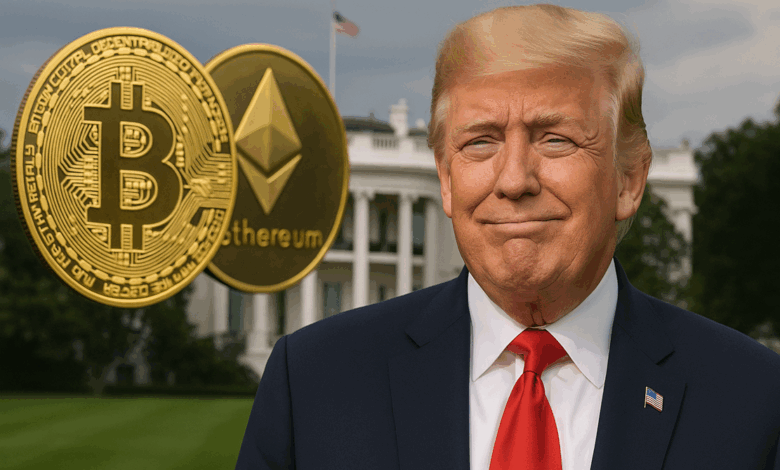
On Thursday, the White House reaffirmed President Donald Trump’s dedication to establishing a tax exemption for everyday Bitcoin and cryptocurrency transactions. This policy aims to simplify the use of digital currencies, making them as straightforward as purchasing a cup of coffee.

Advertisement Banner
Support for Crypto Tax Exemption Grows
During a press briefing, Press Secretary Karoline Leavitt responded to inquiries from Bitcoin Magazine’s Frank Corva regarding the president’s stance on the proposed $600 de minimis threshold for crypto transactions. Leavitt confirmed the administration’s ongoing support, noting that both the Treasury and Congress are actively exploring legislative avenues to realize this initiative.
Alleviating Tax Burdens for Crypto Users
Leavitt emphasized that the proposed measure aims to eliminate the onerous task of calculating capital gains tax on every digital asset transaction. Presently, this requirement hampers the seamless use of cryptocurrencies. By implementing a de minimis exemption, the administration seeks to foster a more crypto-friendly environment, aligning with Trump’s vision of establishing the United States as a global leader in digital assets.
Progress in Legislative Efforts
The anticipated exemption is likely to be part of forthcoming tax legislation, gaining traction on Capitol Hill. Recently, the House advanced the bipartisan Genius Act, a comprehensive federal framework for stablecoins, alongside a bill incorporating the de minimis standard into the Internal Revenue Code. The Genius Act passed with a 308-122 vote and awaits a signing ceremony in the Rose Garden.
Historical Context and Industry Support
This initiative continues a debate initiated in 2022 when Senators Pat Toomey and Kyrsten Sinema introduced the Virtual Currency Tax Fairness Act, advocating for a $200 exemption per transaction. Although lower than the current $600 proposal, it underscores the significance of aligning crypto tax rules with foreign currency standards, as championed by industry groups like Coin Center and the Blockchain Association.
Opposition to Central Bank Digital Currency
Leavitt reiterated the president’s opposition to a central bank digital currency (CBDC), referencing Trump’s executive order from January, which prohibits the Federal Reserve from issuing one. This stance supports legislative efforts to formalize such a ban, with the administration endorsing a regulatory foundation that includes stablecoin oversight, securities clarity rules, and the impending de minimis adjustment.
Balancing Usability and Revenue Protection
The proposed $600 exemption aims to minimize friction for small-scale crypto transactions while maintaining tax obligations for larger transfers. The final threshold, whether $200, $600, or inflation-adjusted, depends on Senate negotiations. However, the White House’s endorsement provides strong momentum for the measure. Leavitt concluded that the president is eager to sign any pro-crypto legislation Congress presents.
As of the latest update, Bitcoin is valued at $120,576.
Editorial Standards and Quality Assurance
At Bitcoinist, our editorial process prioritizes delivering well-researched, accurate, and unbiased content. Each page undergoes meticulous review by top technology experts and seasoned editors, ensuring the integrity and relevance of our content for our readers.
“`