

Exploring Bitcoin Amidst Geopolitical Uncertainties
Our editorial content is crafted with precision and expertise, thoroughly reviewed by industry leaders and experienced editors. We ensure transparency with an ad disclosure policy.
Bitcoin’s Struggle Below $70,000 Amid Middle East Tensions
Bitcoin is currently grappling with challenges as it remains below the $70,000 mark, largely due to escalating geopolitical tensions in the Middle East. The cryptocurrency has shown attempts at stabilization after recent fluctuations, but the ongoing conflict in the region continues to fuel market uncertainty. Investors are vigilantly observing developments around the Strait of Hormuz, a critical energy corridor, as tensions heighten concerns about potential disruptions to global energy supplies and broader macroeconomic stability.

Advertisement Banner
Impact of Geopolitical Events on Energy Markets
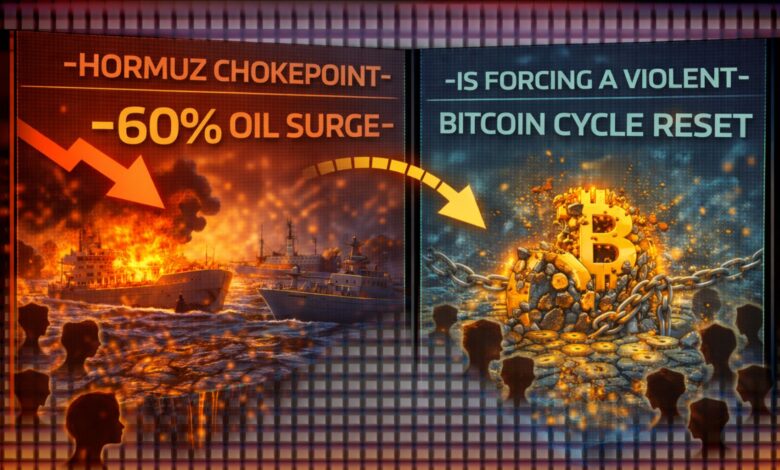
According to a CryptoQuant analysis by Darkfost, the geopolitical situation has already visibly impacted energy markets. Since the start of the year, oil prices have surged by over 60%, a stark reflection of mounting fears regarding supply disruptions as the conflict unfolds. The magnitude of this price increase underscores the vulnerability of global markets to developments in such a strategically vital region. The Strait of Hormuz is crucial, with approximately 20% of the world’s daily oil exports passing through its narrow waters, while nearly 35% of all seaborne oil shipments rely on its uninterrupted operation. As tensions rise, markets are pricing in the risk of prolonged instability, leading to increased volatility in both traditional and digital assets.
Oil Price Surge and Its Macro Implications for Bitcoin
Darkfost emphasizes that any event capable of obstructing the Strait of Hormuz or disrupting maritime transit can instantly affect global oil prices. Given the substantial portion of global energy that moves through this corridor, even perceived risks prompt rapid price adjustments in energy markets. The recent increase in oil prices not only reflects current tensions but also the market’s effort to account for potential supply disruptions. The repercussions extend beyond energy, as sustained oil price hikes typically drive inflation through elevated transportation, production, and logistics costs. Financial markets are particularly sensitive to these shocks, as they can alter expectations for monetary policy and interest rates, tightening financial conditions worldwide.
Bitcoin’s Vulnerability in a Volatile Macro Environment
For highly volatile assets like Bitcoin, such macroeconomic environments have historically been challenging. Periods of strong upward momentum in oil prices often coincide with late-cycle phases in Bitcoin’s market structure when risk appetite diminishes, and investors shift capital toward safer assets. These dynamics also mirror rising geopolitical tensions, which rarely encourage aggressive risk-taking in speculative markets. In this context, Darkfost argues that policymakers, including prominent figures like President Donald Trump, have significant incentives to swiftly manage the energy shock, as prolonged oil price increases could exacerbate financial instability globally.
Bitcoin’s Attempted Consolidation Near $67,000 Post-Correction
Bitcoin is currently stabilizing around the $67,000 level following a sharp correction from its cycle highs above $110,000 reached in late 2025. The recent downturn intensified during the early months of 2026, pushing prices below the 50-week moving average and signaling a shift towards a more defensive market structure. Momentum weakened significantly once Bitcoin fell below the $90,000–$95,000 range, which had previously served as a key support zone during the rally’s latter stages.
Potential Short-Term Consolidation Zone for Bitcoin
The current price action suggests Bitcoin is attempting to establish a temporary consolidation range between $65,000 and $70,000. This zone now functions as a crucial short-term equilibrium area where buyers and sellers are reassessing market direction after the rapid sell-off. From a structural perspective, the 100-week moving average remains slightly above the current price and is beginning to flatten, indicating a loss of broader uptrend momentum. Meanwhile, the 200-week moving average, located near the mid-$50,000 region, continues its upward slope and may represent critical long-term support if selling pressure intensifies. Increased volume activity during the recent decline suggests significant distribution occurred during the correction. For Bitcoin to regain stronger bullish momentum, it would likely need to reclaim the $70,000–$75,000 region and stabilize above shorter-term moving averages.
Commitment to Editorial Excellence
Editorial Process: At bitcoinist, our editorial process is dedicated to delivering thoroughly researched, accurate, and unbiased content. We adhere to strict sourcing standards, and each page undergoes rigorous review by our team of top technology experts and seasoned editors. This process ensures the integrity, relevance, and value of our content for our readers.
“`