South Korea Sets Ownership Limits for Major Shareholders in Crypto Exchanges
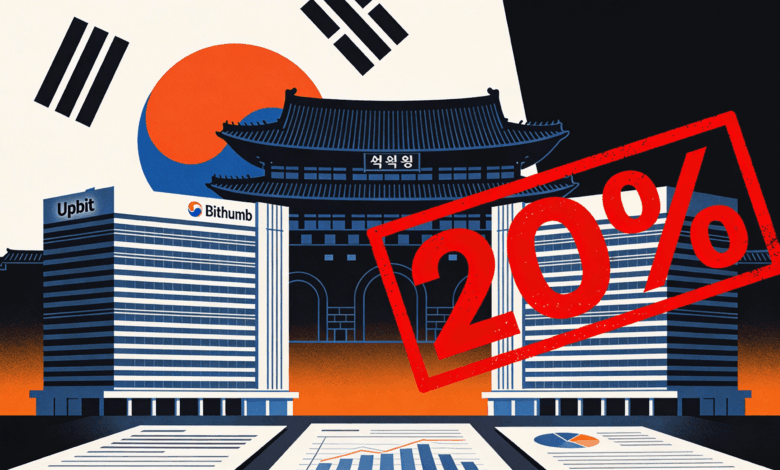
In a significant regulatory development, South Korean authorities and the ruling party have reached a consensus on imposing a 20% ownership cap for “major shareholders” in cryptocurrency and virtual assets exchanges. This new regulation will be implemented with a three-year grace period, allowing exchanges time to adapt.
Journey from Stringent Proposals to Consensus
After enduring prolonged negotiations and discussions, the Financial Services Commission (FSC) and the Democratic Party’s digital asset task force have finally agreed on a 20% ownership limit for major shareholders, as reported by the Korea Herald. This decision marks the culmination of persistent efforts by the FSC, South Korea’s premier financial regulatory body, to reduce founder dominance at the country’s largest crypto exchanges.

Advertisement Banner
The initial proposal by regulators suggested a stricter ownership range of 15–20%, which met with considerable resistance from the industry. The Digital Asset Exchange Alliance (DAXA), representing South Korea’s five leading exchanges including Upbit and Bithumb, was at the forefront of this opposition.
Terms of the Agreement
The decision to set a 20% cap, accompanied by a three-year grace period, appears to be a strategic compromise aimed at easing industry tensions. This grace period offers major exchanges like Upbit and Bithumb, which dominate approximately 90% of the domestic crypto market, the necessary time to adjust their shareholder structures.
For smaller exchanges such as Coinone, Korbit, and GOPAX, which do not meet the 20% market-share threshold, authorities have extended an additional three-year grace period, allowing a total of six years to comply with the new ownership restrictions.
Special Provisions
In an interesting development, the FSC has introduced certain exceptions via an enforcement decree. These allow for ownership stakes of up to 34% but are restricted to new business ventures, not existing exchanges. This mirrors the Commercial Act’s 33.3% veto threshold for general shareholders’ meetings, thus granting new qualified investors significant influence without full control.
Finalizing the Digital Asset Basic Act
According to Hankyung, the ruling party’s policy committee is preparing to finalize the details of this ownership cap in a closed-door meeting with the Financial Services Commission. This cap is expected to be incorporated into the broader Digital Assets Basic Act, a comprehensive legislative package covering various aspects of crypto regulation, including stablecoin guidelines and crypto exchange-traded funds.
However, the passage of this bill remains uncertain. The Korea Herald highlights ongoing opposition from some lawmakers and political parties, who argue against the stringent limits on major shareholder stakes, raising questions about whether the cap will pass the National Assembly in its current form.
Editorial Integrity
The editorial process at our publication is committed to providing meticulously researched, accurate, and impartial content. We adhere to rigorous sourcing standards, with each piece undergoing thorough review by our team of leading technology experts and experienced editors. This process guarantees the integrity, relevance, and value of our content for our readers.
“`