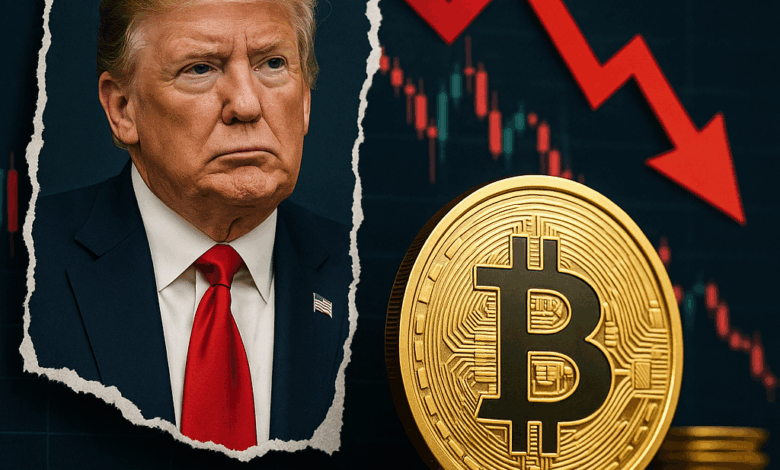
Exploring the $500 Million Investment: Political and Regulatory Implications
In a significant development that stretches beyond the realm of digital currencies, a $500 million investment by a member of the Abu Dhabi royal family into a crypto venture associated with Donald Trump has ignited a broader discussion. This debate touches on political sway, oversight by regulators, and how major financial institutions like JPMorgan Chase handle the risks associated with cryptocurrency.
The World Liberty Financial Deal: A Political Lightning Rod
As per a report by The Wall Street Journal, entities connected to Sheikh Tahnoon bin Zayed Al Nahyan have procured a 49% share in World Liberty Financial (WLFI), a cryptocurrency platform linked to the Trump family, for a staggering $500 million. This agreement, reportedly endorsed by Eric Trump just four days before Donald Trump assumed office, has intensified scrutiny. Donald Trump has distanced himself from the transaction, asserting that his sons manage the business autonomously.

Advertisement Banner
The investment unfolds in phases, commencing with an initial $250 million payment. Of that sum, approximately $187 million is believed to have been allocated to entities associated with the Trump family, with the remainder benefiting other WLFI founders. Should the investment proceed as planned, the Tahnoon-backed entity would stand as WLFI’s primary shareholder.
The magnitude, foreign involvement, and timing of this deal have sparked inquiries from US lawmakers, leading figures like Senator Elizabeth Warren to urge a suspension of regulatory reviews concerning WLFI. Although no official investigation has been launched, WLFI maintains that the transaction was executed independently of Donald Trump’s influence.
JPMorgan, Legal Challenges, and Crypto Dynamics
This revelation comes amid JPMorgan Chase’s legal confrontation with Donald Trump, who alleges politically driven account closures. The bank insists its practices align with legal and regulatory standards. Meanwhile, JPMorgan CEO Jamie Dimon has publicly sparred with Coinbase executives over cryptocurrency regulation, underscoring persistent tensions between traditional banking institutions and digital asset firms.
For investors, these entwined headlines renew focus on JPMorgan’s approach to managing reputational and regulatory challenges. Although the bank’s stock has shown robust long-term growth, analysts caution that political disputes, legal expenses, and evolving crypto policies could impact market sentiment, especially with increased regulatory scrutiny on “debanking” practices and banks’ exposure to digital assets.
The Broader Impact of the Abu Dhabi Investment
The involvement of Abu Dhabi has attracted additional attention due to Sheikh Tahnoon’s role as chairman of G42, an AI company recently granted US approval to acquire advanced chips from American suppliers. While there are no allegations of misconduct, the intersection of foreign investment, sensitive technology approvals, and a Trump-associated crypto initiative has magnified concerns regarding transparency and influence.
Our Editorial Commitment
At Bitcoinist, our editorial process is devoted to producing content that is thoroughly researched, precise, and impartial. We adhere to rigorous sourcing protocols, with each article undergoing meticulous review by our team of top technology experts and experienced editors. This ensures our content’s integrity, relevance, and value for our readers.