
Hong Kong’s Pioneering Stablecoin Regulations and Their Global Impact
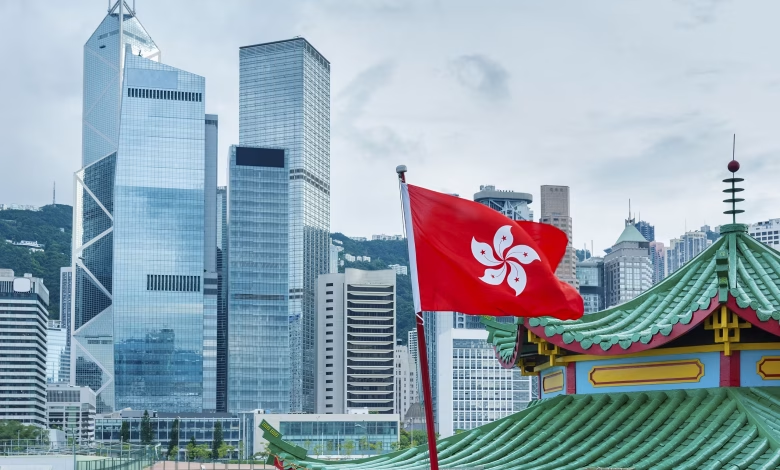
In an exciting development for the Asian financial landscape, Hong Kong’s regulatory authorities unveiled a comprehensive framework on August 1, aimed at governing the issuance and management of fiat-based stablecoins. This forward-thinking move, while demanding more rigorous compliance from stablecoin operators, marks a significant acknowledgment of digital assets’ potential, serving as a beacon of optimism for investors.
Stablecoin and Crypto Ventures in Hong Kong Garner Over $1.5 Billion
Recent insights from a Reuters report highlight a surge in capital acquisition activities among fintech enterprises following Hong Kong’s new stablecoin guidelines. The new regulations stipulate that all aspiring stablecoin issuers must secure a license from the Hong Kong Monetary Authority (HKMA). Existing operators benefit from a six-month grace period to align with these regulations. Beyond licensing, the framework encompasses reserve asset management, anti-money laundering protocols, and redemption mechanisms. In the aftermath of these regulatory changes, it has been reported that at least 10 publicly traded fintech firms in Hong Kong raised over $1.5 billion through share placements. These funds are earmarked for investments in stablecoins, blockchain payment infrastructures, and traditional cryptocurrencies. Noteworthy entities include the digital asset powerhouse OSL Group, which successfully completed a $300 million equity financing round in late July, alongside Dmall Inc. and the prominent AI firm SenseTime Group.

Advertisement Banner
Asian Markets Energized by Trump’s Pro-Crypto Initiatives
In a separate report by Bloomberg, the burgeoning regulatory and investment activities in Hong Kong and other Asian territories are partly attributed to former US President Donald Trump’s persistent efforts to foster a crypto-friendly climate in the United States. On July 18, Trump enacted the landmark GENIUS Act, a legislative milestone creating a robust regulatory framework for stablecoins. This pro-crypto momentum has catalyzed interest in stablecoins across Asian nations such as South Korea, Malaysia, Thailand, and the Philippines, despite prevalent concerns regarding capital flight. A significant portion of stablecoins, valued at around $256 billion, remains USD-pegged. In South Korea, transactions involving USDC, USDT, and USDS on local exchanges reached approximately 57 trillion won ($41 billion) in the first quarter of 2025 alone. To address potential challenges, South Korea’s ruling Democratic Party has proposed the Digital Asset Basic Act, aiming to empower local entities to issue won-pegged stablecoins legally. Nonetheless, this initiative faces opposition from some lawmakers.
The total cryptocurrency market capitalization is valued at $3.66 trillion, reflecting a dynamic and evolving digital asset landscape.
Our Editorial Commitment to Excellence
At Bitcoinist, we prioritize delivering well-researched, accurate, and impartial content. Our editorial process adheres to strict sourcing standards, with each article undergoing meticulous review by our team of leading technology experts and experienced editors. This rigorous approach ensures that our content consistently provides integrity, relevance, and value to our readers.