

Federal Reserve Governor Warns of Potential Loopholes in Stablecoin Regulation
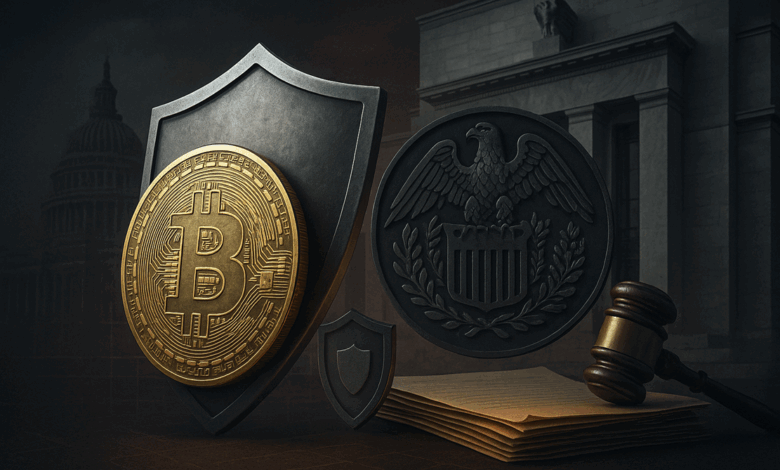
Federal Reserve Governor Michael S. Barr recently addressed the audience at DC Fintech Week, applauding Congress for setting boundaries around stablecoins. However, he also cautioned that the drafting of the new legislation could introduce risks and regulatory arbitrage. This includes the possibility of Bitcoin-linked instruments being included in stablecoin reserves while remaining largely outside the Federal Reserve’s direct oversight.
Bitcoin’s Possible Loophole in the GENIUS Act
During his October 16 address in Washington, Barr highlighted the rapid pace of payment innovation. He acknowledged that the newly enacted GENIUS Act offers clarity for stablecoin issuers regarding their place in the regulatory and supervisory framework, which could accelerate the development of new payment solutions. Nonetheless, he emphasized that the law’s success hinges on the specifics of its regulatory implementation. Barr remarked, “Regulators have a lot of work to do to implement the act effectively.”

Advertisement Banner
Barr’s most significant warning focused on the types of permissible reserve assets for payment stablecoins under the GENIUS Act. The act aims to ensure safety by limiting reserves to high-quality, liquid instruments. However, it also permits reserves based on overnight repurchase agreements backed by “any medium of exchange authorized or adopted by a foreign government.”
To illustrate, Barr mentioned, “El Salvador, until recently, recognized Bitcoin as legal tender and still allows its use for voluntary transactions. This could lead to arguments that Bitcoin repurchase agreements qualify as eligible reserve assets for a stablecoin.” He cautioned that a sharp decline in Bitcoin’s value might leave stablecoin issuers with devalued Bitcoin, potentially undermining the stablecoin’s one-to-one backing. Barr concluded that regulations should aim to minimize such risks. The GENIUS Act places responsibility across multiple regulators—four federal agencies and numerous state and territorial bodies—creating a patchwork oversight system for stablecoin issuers.
Beyond Bitcoin: Additional Cryptocurrency Risks
Barr expressed concerns about the potential for uneven interpretations of the law’s protective measures and the incentives for “charter choice,” which could dilute federal prudential intentions. “The diversity in regulatory frameworks applicable to permitted issuers might lead to regulatory arbitrage,” he stated.
He also noted other reserve design vulnerabilities within the GENIUS Act. The law allows for uninsured deposits as permissible reserves, recalling their role as a “key risk factor during the March 2023 banking stress.” While regulators can limit concentrations of such deposits, Barr pointed out that the effectiveness of these rules would depend on their precise formulation.
Additionally, Barr criticized the statute’s scope and structural provisions. It grants federal and state regulators the authority to approve a broad range of activities for stablecoin issuers, including “digital asset service provider” and “incidental” businesses. Barr warned that issuers might attempt to stretch these activity limitations, potentially engaging in operations similar to those of FTX. Such breadth could result in issuers having risk profiles that deviate significantly from straightforward payment functions, especially if housed in trust-chartered entities.
On the topic of capital, Barr argued that the GENIUS Act’s issuer-level requirements might be too restrictive once firms expand into additional business lines. This concern is particularly relevant given that bank-affiliated issuers are exempt from consolidated capital coverage. “Coordination among federal and state regulators is crucial for setting appropriate capital requirements,” Barr emphasized, adding that the law’s criteria for determining whether state rules are “substantially similar” to federal standards would be significant in practice.
He also highlighted consumer protection gaps. The act does not encompass all instruments marketed as “stablecoins,” allowing certain dollar-denominated tokenized products to be excluded from the new regulatory regime. Barr warned that this omission could mislead users into believing they have safeguards when, in reality, “there are no prudential protections of any kind.” He called on federal and state enforcers to address misrepresentations using unfair and deceptive practices authorities and noted the law’s lack of fraud and unauthorized-transfer protections that apply to traditional payment systems.
As of the latest update, Bitcoin is trading at $108,973.
Editorial Standards and Review Process
At Bitcoinist, our editorial process is dedicated to delivering well-researched, accurate, and unbiased content. We adhere to strict sourcing standards, and each article undergoes thorough review by our team of leading technology experts and experienced editors. This rigorous process ensures that our content remains reliable and valuable for our readers.