Ripple’s Early Challenges and Unexpected Connections
Editorial Content: Crafted by experts and vetted by leading industry professionals for accuracy and integrity.
An Intriguing Revelation from Ripple’s CEO
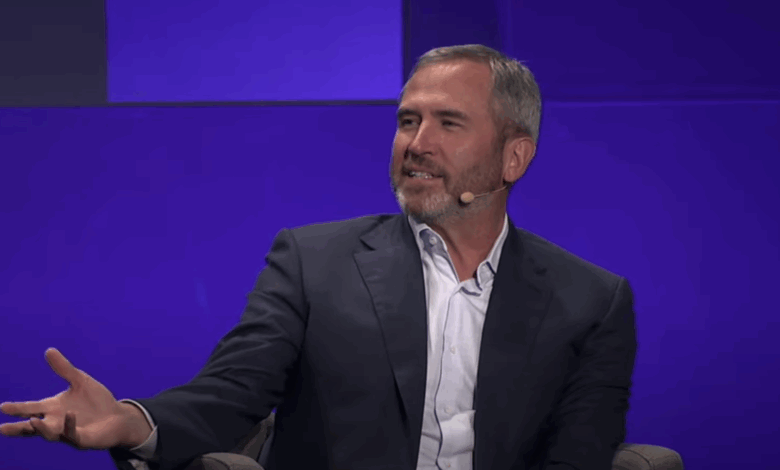
A previously unnoticed video clip featuring Ripple CEO Brad Garlinghouse has resurfaced, sparking renewed interest in the crypto community. This clip from Garlinghouse’s presentation at the XRP Australia event in Sydney in 2026 highlights a startling connection between Ripple’s initial obstacles and details from the latest Epstein documents. This revelation is significant as it recontextualizes Ripple’s longstanding disputes in Washington and within the cryptocurrency realm, suggesting a deeper narrative beyond typical industry competition. Garlinghouse implied that some industry players viewed Ripple as a significant threat.

Advertisement Banner
During his talk on February 27, Garlinghouse recounted how Ripple co-founder Chris Larsen had often seemed “a bit conspiratorial” about the opposition the company faced. Yet, Garlinghouse noted that after reviewing the Epstein documents, it became apparent that Larsen’s concerns were not unfounded. “What’s interesting is that they were indeed afraid of us. Our technology was ahead of its time and posed a threat. There were efforts to undermine us, and in hindsight, Chris’s early warnings were quite prescient.”
Ripple’s Connection to the Epstein Files
The video is gaining traction among XRP enthusiasts following the U.S. Justice Department’s January 30 release of over three million pages under the Epstein Files Transparency Act. However, what exactly is the connection between Ripple and these files? It’s not a partnership with Epstein or evidence of Epstein orchestrating actions against Ripple. Instead, the link arises from a 2014 email found in the document release. In this email, Austin Hill, a former Blockstream co-founder, communicated with Jeffrey Epstein and Joichi Ito, copying Reid Hoffman, expressing concerns over investor support for Ripple and Stellar.
Hill’s email categorized these projects as detrimental to the Bitcoin-centric ecosystem Blockstream aimed to nurture, and he urged the recipients to reconsider their investments. This email illustrates an early power struggle within the cryptocurrency industry regarding which networks and companies would secure capital, talent, and legitimacy. Hill’s correspondence reportedly urged investors to “reduce or take your allocation away,” essentially forcing a choice between competing entities.
The Wider Implications
Epstein’s involvement in this email chain is less sinister than it is reflective of his connections within the crypto industry. According to reports, Epstein had financial interests in Blockstream via a fund linked to former MIT Media Lab director Joi Ito. This broader release of documents has reignited scrutiny of Epstein’s connections to early crypto investors, Bitcoin development communities, and MIT-affiliated networks.
Garlinghouse’s argument was not that Epstein was directly orchestrating an anti-Ripple agenda but rather that the newly public documents seem to validate longstanding suspicions within Ripple: influential figures within early Bitcoin circles saw Ripple as something to be sidelined rather than merely debated. Nonetheless, these documents fall short of proving any coordinated effort with regulators or a covert influence on the SEC’s later case against Ripple.
Current Market Status
As of the latest updates, XRP is trading at $1.34, remaining below the 200-week exponential moving average, as shown in the XRPUSDT chart on TradingView.com.
Commitment to Editorial Integrity
Our Editorial Process: At bitcoinist, we are committed to providing thoroughly researched, accurate, and unbiased content. We adhere to rigorous sourcing standards, with each article undergoing careful review by our team of top technology experts and seasoned editors, ensuring the integrity, relevance, and value of our content for our readers.
“`