Comprehensive Editorial Content
Our editorial process is dedicated to producing well-researched, precise, and impartial content. With stringent sourcing standards, every article is meticulously reviewed by our team of top-tier technology professionals and experienced editors. This rigorous process guarantees the integrity, relevance, and value of our content for our readers.
China Intensifies Cryptocurrency Regulations
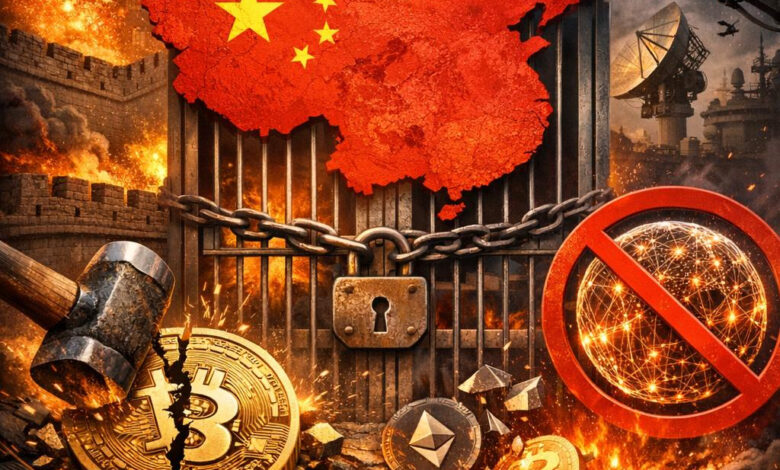
In a decisive move to tighten its control over the cryptocurrency sector, China has reiterated its long-standing prohibition on virtual currencies. Additionally, the nation aims to implement more stringent oversight on offshore token issuance associated with Chinese assets. According to a Reuters report, Chinese authorities plan to closely monitor the issuance of tokens backed by assets located within China and have expressly prohibited the unauthorized issuance of yuan-pegged stablecoins outside the country.

Advertisement Banner
China’s Renewed Focus on Crypto Regulation
A recent notice published on the People’s Bank of China’s website underscores that domestic companies and overseas entities under Chinese authority are barred from issuing virtual currencies abroad without official approval. This move effectively closes the door on unauthorized offshore yuan stablecoins, reinforcing Beijing’s stance that cryptocurrencies cannot operate as money within China’s financial system.
Though this announcement largely reiterates China’s existing ban on cryptocurrencies, it introduces new clarity concerning the evolving landscape of digital finance. Some industry experts perceive this language as an indication that China is setting the stage for regulating real-world asset (RWA) tokenization. According to Louis Wan, CEO of Unified Labs, this distinction represents a significant development as it clearly separates virtual currencies from RWA tokenization. While cryptocurrencies continue to be banned, RWA activities are beginning to be integrated into the regulatory framework. He regards this as a milestone for China’s RWA sector.
Heightened Scrutiny on Private Stablecoins
China’s central bank has reinforced its control over digital currency issuance, emphasizing that the digital yuan is the only legitimate form of state-backed digital currency. Winston Ma, an adjunct professor at NYU School of Law, notes that regulators are signaling zero tolerance for private yuan-based stablecoins circulating on global crypto exchanges.
Authorities have expressed concerns that recent speculative activities in virtual currencies have introduced “new risks” necessitating additional regulatory measures. In a joint statement by the People’s Bank of China and seven other government agencies, officials reiterated that virtual currencies do not hold the same legal status as traditional fiat money.
Regulators have cautioned that, without explicit authorization, neither domestic firms nor their overseas affiliates can issue cryptocurrencies abroad. Both Chinese and foreign entities are prohibited from issuing offshore stablecoins linked to the yuan without proper authorization. Authorities highlighted that stablecoins pegged to fiat currencies could perform some functions similar to those of circulating money, making them a particular focus of regulatory scrutiny.
As the cryptocurrency market continues to evolve, China’s actions appear to signal a decisive strategy in controlling its domestic financial landscape while navigating the complex terrain of global digital finance.