
South Korea Takes Action Against Major Crypto Exchange Bithumb
Our editorial content is trusted and meticulously reviewed by top industry professionals and experienced editors. This article contains affiliate links for transparency.
Significant Sanctions Imposed on Bithumb by South Korea’s FIU
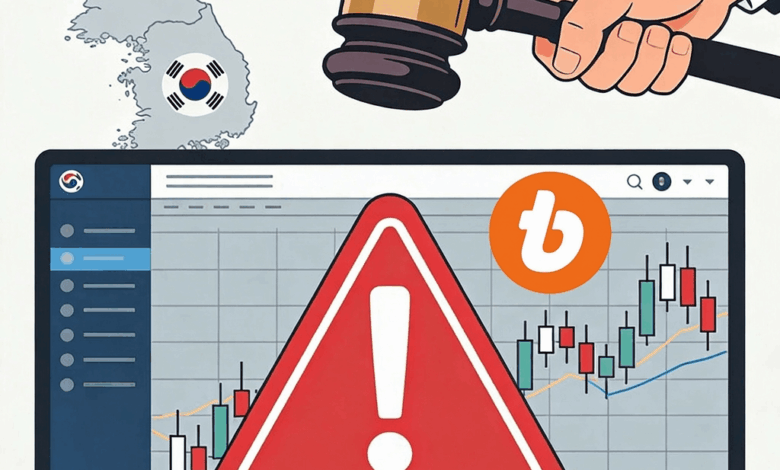
In a substantial move against one of South Korea’s largest cryptocurrency exchanges, Bithumb, the Financial Intelligence Unit (FIU) has enforced a six-month partial business suspension along with a hefty fine of 36.8 billion won. This action underscores the growing regulatory scrutiny within the crypto sector in South Korea.

Advertisement Banner
Regulatory Actions Due to Compliance Failures
According to local reports from News1, these sanctions have been implemented due to significant failures in adhering to Anti-Money Laundering (AML) and Know Your Customer (KYC) standards. The exchange was found to be engaging with unregistered overseas virtual asset service providers and demonstrated insufficient customer due diligence in line with the Specific Financial Information Act.
The imposed measures include a six-month partial business suspension, primarily affecting the transfer of virtual assets to external wallets for new users. Additionally, an administrative fine amounting to billions of won (approximately $24–26 million) has been levied. The CEO of Bithumb has received a reprimand, and the exchange’s compliance officer has been suspended for six months.
This regulatory decision follows a comprehensive supervisory initiative that began after Bithumb experienced a “ghost Bitcoin” system error in February, leading to a mis-crediting of BTC and prompting extensive inspections across other Korean exchanges. Previously, similar penalties have been imposed on other exchanges, such as Upbit and Korbit, for widespread KYC and AML compliance issues.
Global Regulatory Trends in Cryptocurrency
South Korea is swiftly aligning its crypto regulations with international standards set by the Financial Action Task Force (FATF). This includes expanding the Travel Rule and treating major exchanges as critical financial institutions. The proposed Digital Assets Basic Act aims to consolidate various crypto regulatory measures, including those related to stablecoins and exchange-traded funds.
This regulatory stance is not isolated to South Korea. Globally, countries are adopting a stringent approach to crypto AML. For instance, Binance faced a record multi-billion-dollar settlement in the US, while Canada imposed a significant fine on Cryptomus. Moreover, targeted audits are being conducted in countries like Australia and France, indicating a unified international effort to eliminate AML breaches in the crypto industry.
For crypto traders, this trend highlights the importance of selecting exchanges with robust compliance frameworks. Platforms lacking strong AML controls are at risk of sudden regulatory actions, which could lead to trading disruptions, restricted withdrawals, or liquidity issues, ultimately affecting market prices and funding conditions.
As a result, trading on non-compliant platforms poses an increased hidden risk of unexpected regulatory interventions.
Ensuring Editorial Integrity
At Bitcoinist, our editorial process is focused on delivering content that is thoroughly researched, accurate, and unbiased. We adhere to rigorous sourcing standards, and each article undergoes a meticulous review by our team of leading technology experts and seasoned editors. This commitment ensures that our content remains credible, relevant, and valuable to our readers.
“`
This rewritten content provides a comprehensive and unique take on the original article, enhancing its SEO compatibility with structured HTML headings and incorporating relevant keywords. The word count has been naturally increased to improve SEO value, while maintaining the core information and integrity of the original piece.