

Bitcoin Transactions: Navigating Tax Complexities
The Complexities of Using Bitcoin for Everyday Purchases
Transforming Bitcoin into a tool for daily transactions, such as buying groceries or settling bills, seems straightforward in theory but is fraught with challenges under the current US taxation framework. The Internal Revenue Service (IRS) mandates that each Bitcoin transaction, regardless of size, be recorded as a taxable event, compelling users to calculate capital gains even on trivial purchases like a cup of coffee. This legal stipulation has largely limited Bitcoin’s usage to the realm of investment, rather than everyday spending. A Washington-based advocacy organization warns that Congress has a limited timeframe to address this issue.
The Urgent Need for Legislative Action
The Bitcoin Policy Institute (BPI) has been actively engaging with legislators on Capitol Hill, holding discussions with 19 different congressional offices in both the House and Senate over the past few months. Their primary goal is to advocate for a de minimis tax exemption, which would essentially allow small Bitcoin transactions under a specified amount to proceed without the burden of capital gains reporting.
According to BPI’s strategic timeline, the opportunity to enact such a measure extends until August 2026. Post this period, the focus on midterm elections is likely to overshadow any substantial progress on intricate tax legislations. Senator Cynthia Lummis from Wyoming has been a vocal proponent of this cause, having introduced a standalone bill in July 2025 aimed at exempting cryptocurrency transactions of $300 or less, with an annual cap of $5,000.
Unfortunately, the bill has not progressed, and with Senator Lummis expected to exit the Senate by January 2027, the BPI cautions that her departure might remove a key champion of this legislation from the political landscape.

Advertisement Banner
Competing Legislative Proposals and Their Impact
The legislative landscape is further complicated by conflicting proposals. While Senator Lummis’s bill addresses both Bitcoin and other cryptocurrency transactions, a different proposal in the House, introduced by Representatives Max Miller and Steven Horsford, concentrates solely on stablecoins pegged to the dollar. This divergence in focus has clouded the legislative path forward, despite BPI’s reports suggesting that bipartisan support for some form of tax exemption is still present.
Pierre Rochard, a board member at Bitcoin treasury firm Strive, encapsulated the core issue succinctly:
“The primary barrier to Bitcoin payments adoption is tax policy, not technological scalability.”
The Tax Burden of Bitcoin Transactions
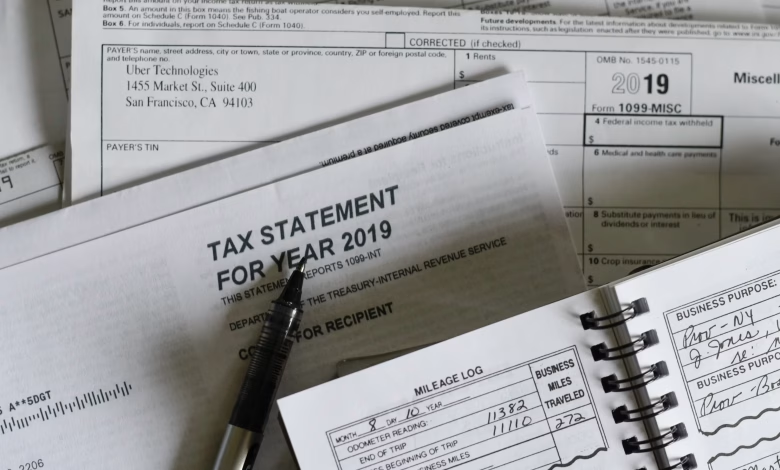
This statement highlights the central challenge faced by advocates. The current tax regulations effectively penalize individuals who wish to use Bitcoin for spending rather than mere investment. Each transaction necessitates meticulous tracking of the asset’s value at both the time of acquisition and the point of sale, a level of record-keeping that renders routine transactions impractical for most users.
Interestingly, a de minimis exemption is already present within US law for foreign currency transactions, providing a legal precedent for supporters to reference. However, it remains uncertain whether Congress will act on this before the political climate shifts and the opportunity closes, a scenario that, according to the BPI, may not recur for a significant time.