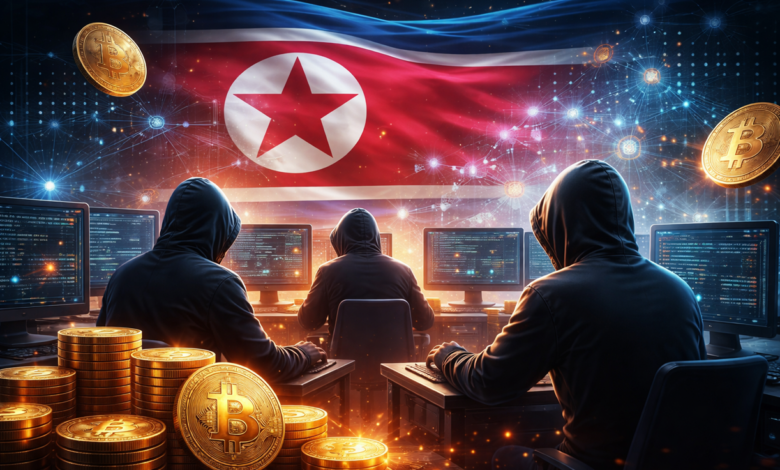
North Korea Sanctions and Cryptocurrency: An In-Depth Analysis
In a recent development, cryptocurrency has become a focal point in the United States’ latest sanctions against North Korea. On March 12, the U.S. Treasury’s Office of Foreign Assets Control (OFAC) identified six individuals and two entities involved in North Korean IT schemes. This action underscores the role of digital currencies in facilitating illicit financial activities across international borders.
OFAC’s Strategic Targeting of North Korean Crypto Operations
According to the Treasury Department, these schemes have systematically defrauded American businesses, accumulating nearly $800 million in 2024 for North Korea’s military initiatives. Secretary Scott Bessent highlighted a strategy involving overseas agents who use false identities and corporate subterfuge to penetrate legitimate companies, thereby gaining sensitive access and leveraging it further. “These deceptive schemes target American enterprises,” he stated. “Treasury will persist in tracing the financial trail.”

Advertisement Banner
This characterization is crucial because it does not merely describe a conventional cybercrime scenario. Both Treasury and Chainalysis emphasize a hybrid approach involving fraudulent recruitment, wage siphoning, financial facilitators, and crypto networks for converting and transferring proceeds. Chainalysis described these operations as “a sophisticated and expanding threat,” asserting that “cryptocurrency plays a central role” in repatriating these funds to North Korea while circumventing sanctions.
The Case of Nguyen Quang Viet
A notable detail in this action involved Nguyen Quang Viet, CEO of Vietnam-based Quangvietdnbg International Services Company Limited. Treasury reported that Nguyen converted approximately $2.5 million into cryptocurrency for North Koreans between mid-2023 and mid-2025. These funds included illicit profits associated with Amnokgang Technology Development Company, a North Korean IT firm managing overseas worker delegations. The designations by OFAC in this case also reached facilitators in the DPRK, Vietnam, Laos, and Spain, highlighting the global spread of these support networks.
Chainalysis noted that the March 12 action targeted 21 designated addresses across various blockchains. These included Ethereum, Tron, and Bitcoin addresses, with seven linked to Amnokgang, two Ethereum addresses tied to Yun Song Guk, one Bitcoin address connected to Hoang Minh Quang, and 11 new addresses for previously designated Sim Hyon Sop, a representative of Korea Kwangson Banking Corp.
Expanding IT-Worker Schemes
The Treasury’s narrative also highlighted how the IT-worker network extends beyond software contracting into broader financial facilitation. It noted that Yun led a group of North Korean freelance IT workers based in Boten, Laos since at least 2023, orchestrating numerous transactions totaling over $70,000 with Hoang Minh Quang linked to IT services. In a related development, Treasury indicated that Do Phi Khanh and Hoang Van Nguyen assisted Kim Se Un, including through bank-account access and crypto dealings, while Hoang also helped acquire foreign currency for the regime.
Escalating Crypto Activities by North Korea
This enforcement action occurs amid an expanding North Korean crypto footprint. Chainalysis reported in its 2026 crypto crime analysis that North Korea stole more than $2 billion in 2025, marking its most successful year to date, while the value received by sanctioned entities surged by 694% last year. In this context, the OFAC designations appear as part of a broader strategy to clamp down on every facet of the DPRK crypto network, from stolen funds and laundering pathways to the labor schemes generating new revenue streams.
As of the latest data, the total cryptocurrency market cap stands at $2.44 trillion, with the market needing to surpass key resistance levels to maintain its momentum.
Editorial Standards
At Bitcoinist, our editorial process is committed to delivering well-researched, accurate, and impartial content. We adhere to rigorous sourcing standards, and each publication undergoes thorough review by our team of leading technology experts and experienced editors. This rigorous process ensures the integrity, relevance, and value of our content for our readers.