

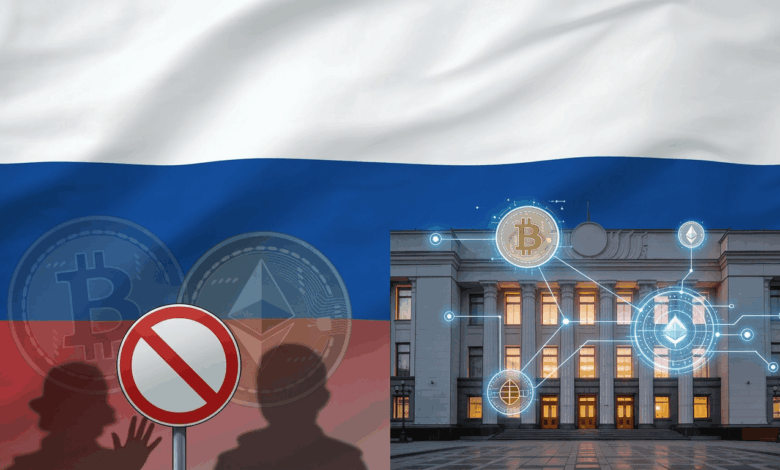
Central Bank of Russia Proposes Licensing for Crypto Exchanges
Our editorial team, consisting of industry experts and experienced editors, ensures high-quality content. This article may contain advertisements.
Russia’s Strategic Shift Toward Crypto Regulation
In a significant move, the Central Bank of Russia (CBR) is contemplating allowing financial institutions such as banks and brokerage firms to obtain licenses for operating cryptocurrency exchanges. According to a report by Interfax dated March 5, Elvira Nabiullina, the Governor of the CBR, proposed a notification-based licensing process for these institutions based on their existing licenses. This announcement was made during an annual meeting with lending institutions.

Advertisement Banner
Leveraging Banking Expertise for Crypto Regulation
The proposal aims to harness the banking sector’s existing infrastructure to combat money laundering and counter the financing of terrorism and fraud, thereby providing enhanced protection for clients in the digital assets market. This approach is seen as a step towards reconciling the concerns of traditional financial institutions regarding cryptocurrencies. Nabiullina emphasized the importance of banking experience in AML/CFT (anti-money laundering and countering the financing of terrorism) to safeguard crypto market clients:
We hope that your extensive banking experience in AML/CFT, as well as your expertise in countering fraud, will help protect your clients in the crypto market once it is legalized.
Streamlined Licensing Process for Crypto Services
The proposed notification-based licensing would allow financial institutions to integrate cryptocurrency services with their current financial licenses, eliminating the need for a separate approval process. Under these draft rules, cryptocurrencies and stablecoins would be classified as “currency valuables.” While Russians could own and trade them, their use as domestic payment methods would remain restricted.
Risk Management and Investor Limitations
Nabiullina expressed a cautious approach towards risk management, proposing a temporary threshold for banks’ involvement in cryptocurrency:
We would still like to limit the level of risk a bank takes in this area to one percent of capital. Let’s start by seeing how banks operate within the one percent cap, and then see whether we need to move forward.
According to the Interfax report, qualified investors will have no restrictions on acquiring crypto assets, whereas non-qualified investors will be limited to purchasing up to 300,000 rubles annually through a single intermediary. This proposal positions banks as primary regulated gateways for digital asset trading.
Russia’s Evolving Stance on Digital Assets
Since 2020, Russia has acknowledged digital assets as property while prohibiting their use as a payment method. In 2022, the country considered a complete ban but later adopted a “regulate, don’t ban” approach. By 2024–2025, Russia plans to permit limited cross-border use, legalize mining, and restrict market participation to banks and highly qualified investors, leaving retail, peer-to-peer, and foreign platforms in a regulatory gray area.
Gradual Acceptance of Cryptocurrency
Russia is gradually transitioning from a position of resistance to a closely monitored acceptance of cryptocurrency. The push to license banks and brokers as cryptocurrency intermediaries is aimed at bringing activity onshore, imposing taxes, maintaining capital controls, and sidelining unlicensed foreign exchanges, rather than banning crypto outright.
The central bank aims to finalize the comprehensive legal framework by mid-2026. Afterward, penalties for unlicensed intermediaries and offshore platforms failing to localize in Russia are expected to be enforced.
Our Editorial Principles
At bitcoinist, our editorial process focuses on delivering thoroughly researched, accurate, and unbiased content. We adhere to strict sourcing standards, and each article undergoes a meticulous review by our team of top technology experts and seasoned editors. This ensures the integrity, relevance, and value of our content for our readers.