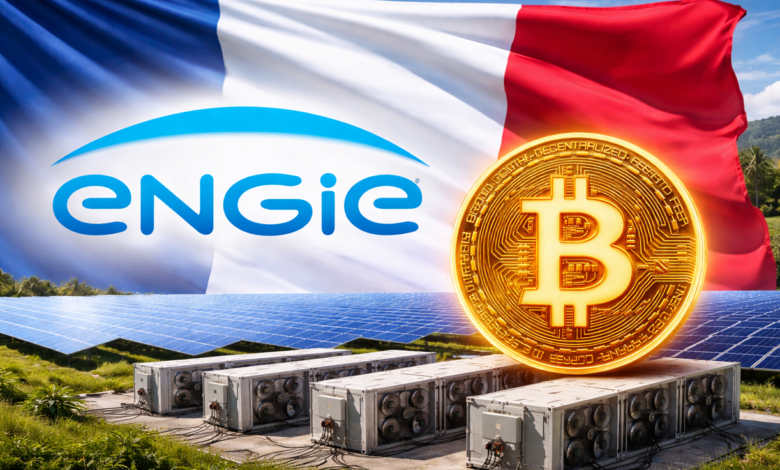
Engie’s Innovative Approach to Solar Energy in Brazil
Engie, a major European utility partly owned by the French government, is considering innovative strategies to enhance the profitability and efficiency of its new solar project, Assu Sol, in Brazil. This move could redefine how renewable energy projects are managed and monetized, particularly in the context of grid balancing and revenue optimization.

Advertisement Banner
Exploring New Opportunities at Assu Sol
Engie’s Assu Sol solar project, located in the northeastern region of Brazil, boasts an impressive installed capacity of 895 MWp. Despite its recent commencement of full commercial operations, the project faces challenges common to renewable energy facilities in Brazil, notably grid curtailments. These curtailments are implemented to stabilize supply and demand but can lead to reduced output.
The Case for Bitcoin Mining and Storage Systems
To tackle these challenges, Engie is exploring the integration of battery storage systems or Bitcoin mining data centers. Such an approach could potentially create localized demand that offsets the impact of curtailed energy production. By considering these options, Engie aims to mitigate financial losses and enhance the project’s economic viability.
A Strategic, Long-Term Vision
Engie’s Brazil unit is in the early stages of assessing potential solutions, as emphasized by Eduardo Sattamini, the company’s country manager for Brazil. He noted that the exploration of these options is part of a broader infrastructure planning initiative, indicating that any implementation would take several years.
Understanding the Broader Implications
This development highlights a growing trend in the renewable energy sector: leveraging flexible buyers for excess or stranded generation. In Brazil, the rapid expansion of renewable capacity, coupled with weak demand growth and infrastructure bottlenecks, has exacerbated the issue of curtailment. Bitcoin mining, with its ability to absorb excess energy, presents an intriguing potential solution.
Engie’s Potential Impact on Bitcoin Markets
While Engie’s exploration of Bitcoin mining may not immediately impact hash rates, it underscores a significant shift in perspective. Large utilities are beginning to view Bitcoin mining as a viable industrial load that can coexist with renewable energy projects, potentially smoothing out grid constraints.
Conclusion
Engie’s innovative approach to addressing grid curtailment at the Assu Sol solar project in Brazil could set a precedent for the integration of renewable energy sources with emerging technologies like Bitcoin mining. As the company moves forward with its feasibility assessments, the renewable energy sector will be watching closely to see how these strategies unfold.
Commitment to Quality Content
Editorial Process: Our commitment to delivering high-quality content is unwavering. Our editorial team, comprised of top technology experts and seasoned editors, rigorously reviews every piece to ensure accuracy, relevance, and integrity. This dedication to excellence guarantees that our readers receive the most reliable and insightful information available.