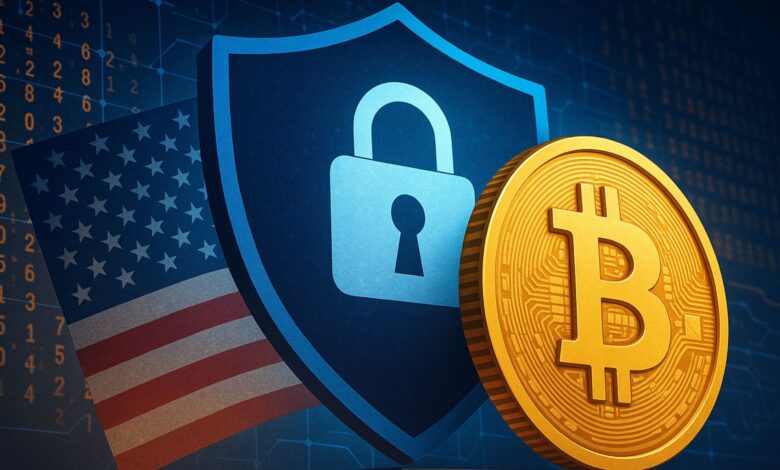
Massive Bitcoin Seizure by US Department of Justice Highlights Crypto Crime Crackdown
The United States Department of Justice (DOJ) has made headlines with the seizure of an astounding 127,195 Bitcoin (BTC) linked to Chen Zhi, an alleged mastermind behind a widespread “pig butchering” scam operating out of Cambodia. This unprecedented action, valued at approximately $15 billion, represents the largest Bitcoin confiscation in the DOJ’s history. It emphasizes the increasing scale of global cryptocurrency-related crimes and the pivotal role the U.S. government is playing in tracing and recovering digital assets.
Unraveling the International Fraud Scheme
Details of the indictment against Chen Zhi were recently unveiled in a federal court in Brooklyn, New York. This legal document outlines a sophisticated international fraud operation that ensnared thousands of victims worldwide through cunning investment schemes. Prosecutors accuse Chen and his network of laundering billions of dollars in stolen funds via cryptocurrency exchanges and shell companies, a tactic that made it challenging to track the assets until they were ultimately frozen.

Advertisement Banner
This latest seizure significantly boosts the U.S. government’s already substantial Bitcoin reserves, which have been bolstered by previous enforcement actions, including the infamous Silk Road and Bitfinex hack cases. Currently, U.S. holdings surpass 316,000 BTC, valued at nearly $36 billion, positioning the government as one of the largest Bitcoin holders worldwide.
US Government’s Expanding Bitcoin Portfolio After Historic Seizure
According to CryptoQuant, the U.S. government now controls a staggering 316,760 BTC, worth around $35.9 billion, following the latest seizure from Chen Zhi’s “pig butchering” scheme. The confiscation of 127,195 BTC in this single operation—currently valued at $13.2 billion—marks the most extensive Bitcoin seizure ever carried out by the DOJ. Earlier this year, at Bitcoin’s peak, these holdings were valued at approximately $15.5 billion.
This operation fortifies the U.S. as one of the world’s largest known Bitcoin holders. The government’s portfolio includes assets from several major law enforcement actions over the past decade, such as:
- Bitfinex Hack (2016): Law enforcement managed to recover 106,910 BTC stolen from the cryptocurrency exchange after an extensive investigation. The funds were linked to Ilya Lichtenstein and Heather Morgan, who were arrested in 2022 after laundering billions.
- Silk Road (2013): The government seized 81,988 BTC from the dark web marketplace run by Ross Ulbricht. This remains one of the earliest and most infamous crypto confiscations.
- Potapenko/Turogin (2022): A smaller seizure of 667 BTC related to Estonian nationals accused of orchestrating a $575 million crypto fraud through shell mining services.
These seizures illustrate how the U.S. has quietly emerged as a significant Bitcoin holder—not through traditional investment but through relentless enforcement and asset recovery in the digital age.
Bitcoin’s Market Dynamics: Support and Resistance Levels
Bitcoin (BTC) is currently trading at around $111,142, demonstrating signs of stabilization following last week’s flash crash that momentarily drove prices below $104,000. The 12-hour chart indicates that BTC has found temporary support near the $110,000 level, which has served as a critical demand zone multiple times since mid-September. This range now represents a battleground between cautious buyers and sellers exploiting market vulnerabilities.
Despite this, BTC remains below the 50-day (blue) and 100-day (green) moving averages, both converging around $114,000–$116,000, creating significant short-term resistance. The 200-day (red) moving average is positioned near $112,000, marginally above current levels, signaling a fragile broader trend. A decisive break above these thresholds could pave the way toward $117,500, but failure to regain momentum might expose BTC to another test of the $108,000–$110,000 range.
Trading volumes remain elevated but are slightly cooling compared to last Friday’s capitulation event, suggesting consolidation rather than panic. Overall, Bitcoin seems to be in a recovery phase, yet the lack of directional conviction implies traders are awaiting stronger catalysts—whether from macroeconomic data, ETF flows, or on-chain signals—before making decisive moves.
Editorial Integrity and Quality Assurance
At the core of the editorial process for our platform is a commitment to delivering thoroughly researched, accurate, and unbiased content. We adhere to stringent sourcing standards, and each page undergoes meticulous review by our team of top technology experts and seasoned editors. This rigorous process ensures the integrity, relevance, and value of our content for our readers, reinforcing our dedication to quality and trustworthiness.
“`