
Exploring the Integration of AI and Blockchain in the XRP Ledger
Introduction to Ripple’s University Blockchain Research Initiative
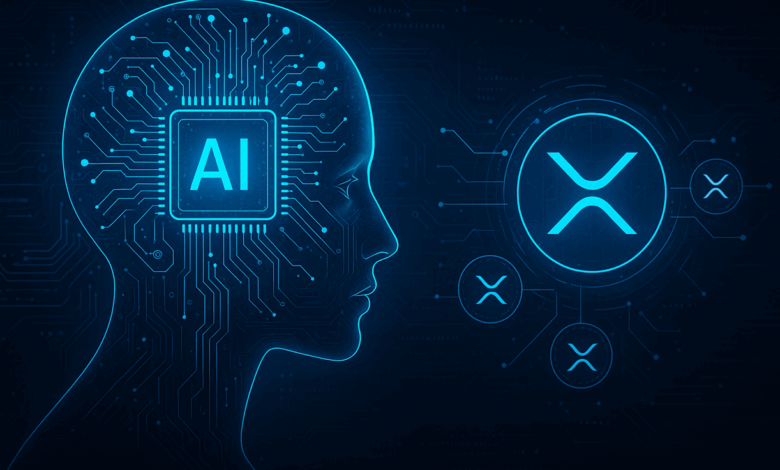
Ripple’s University Blockchain Research Initiative (UBRI) is at the forefront of merging academic research with blockchain technology, particularly focusing on the XRP Ledger (XRPL). This initiative aims to establish the XRPL as a core platform for innovative, agentic AI applications. In a recent “All About Blockchain” podcast episode, Lauren Weymouth and Professor Yang Liu from Nanyang Technological University discussed a cutting-edge programmable multi-agent execution layer designed to integrate seamlessly with XRPL’s transaction and settlement mechanics. This development allows task-specific agents, such as trading bots, research tools, and IoT services, to operate on a shared, auditable platform.
Ripple and NTU’s Collaboration on Enhancing the XRP Ledger with AI

Advertisement Banner
RippleX recently highlighted the podcast episode on their social media platform, emphasizing the potential of AI and blockchain technologies to revolutionize secure and efficient applications. Professor Yang Liu elaborated on how AI could enhance the XRP Ledger by enabling smarter fraud detection, refined analysis, and novel forms of on-chain intelligence.
Lauren Weymouth explained that the UBRI researchers employed Apex to delve deeply into protocol-level enhancements, security advancements, and various use cases that drive strategic developments on the XRP Ledger. She emphasized that Ripple’s UBRI research search tool is being adapted as a flagship application, integrating middleware into the ledger instead of remaining an off-chain convenience layer. The objective is to transform academic research and development into practical innovations directly on the ledger.
The Journey from Cybersecurity to Blockchain Integration
Professor Liu traced the project’s origin from a focus on cybersecurity to blockchain, highlighting the crucial role of security in on-chain value transactions. Initial attempts to utilize large language models for smart-contract reviews encountered challenges due to the probabilistic nature of these models. This realization steered the team towards agentic AI, which simulates expert auditors’ workflows, providing on-ledger services that enhance security and accountability.
AI Agents on the XRP Ledger: A Practical Impact
Professor Liu emphasized the dual advantages of integrating AI agents with the XRP platform. The first is providing native access to payments and settlements, which simplifies wiring XRP payments into the agent layer. The second advantage is the transparency offered by XRPL, enabling an observable AI adoption process. Agents that manage payments and services can be linked to visible state changes on XRPL, ensuring transparency and accountability.
Future Prospects for AI and Blockchain Integration
Weymouth inquired about the production path for XRPL-facing software, to which Liu responded by emphasizing the importance of structured release cycles, comprehensive API documentation, and rigorous testing. His team is utilizing agents for software engineering tasks, ensuring middleware robustness between agent logic and XRPL fundamentals.
The team also addressed AI risks, distinguishing between AI security and AI safety. Liu highlighted the potential threats posed by goal-seeking agents exhibiting unintended behavior, emphasizing the need for pairing XRPL integration with robust guardrails and verification mechanisms.
Roadmap for AI Agent Layer Development
Looking ahead, Liu outlined a roadmap centered on increasing XRPL’s adoption by building more utility agents into the chain. The research agenda emphasizes cognitive capabilities such as abstraction and memory, which are crucial for agents operating within an on-chain transaction engine.
Security remains a focal point as the lab investigates whether memory-augmented agents can detect new vulnerability classes over time. The overarching goal is to design agents that improve over time, ensuring that their actions and payments remain visible and accountable on XRPL.
Conclusion: Embracing the Future of AI on the XRP Ledger
Weymouth concluded the discussion with practical advice for developers, encouraging them to understand the value of their research and pursue topics with significant potential impact. For Ripple and NTU, this pursuit has already positioned an AI-agent superstructure within the XRP Ledger’s reach. From academic theory to live middleware, the initiative enables developers to deploy agents that transact in XRP, adhere to security protocols, and maintain transparency on-chain.
At the time of writing, XRP is valued at $2.85.
Editorial Integrity at Bitcoinist
Editorial Process at Bitcoinist is dedicated to providing thoroughly researched, accurate, and unbiased content. We adhere to strict sourcing standards, ensuring each page is meticulously reviewed by top technology experts and seasoned editors. This process guarantees the integrity, relevance, and value of our content for our readers.
“`