

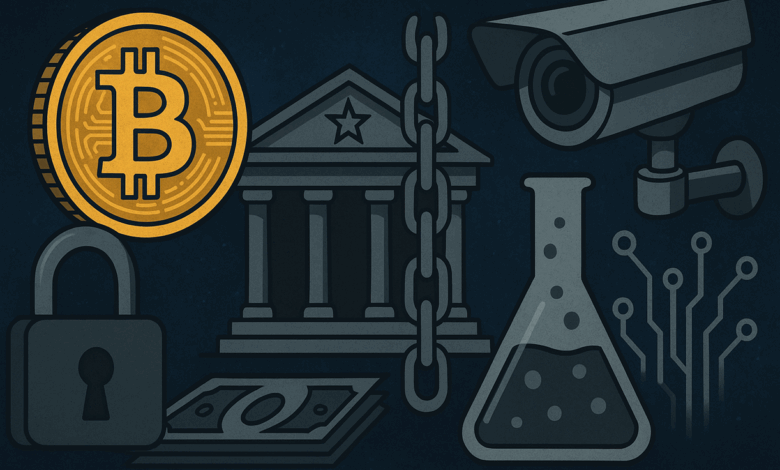
US Government Plans to Extend PATRIOT Act to Cryptocurrency Sector
The United States government is poised to expand its anti-money laundering (AML) powers from the PATRIOT Act into the realm of cryptocurrencies. This strategic move could significantly impact privacy, compliance, and innovation within the digital currency sector. A recent report by The Rage reveals that the Treasury Department intends to enforce Section 311 of the USA PATRIOT Act—one of the most comprehensive financial monitoring tools—on cryptocurrency operations such as mixers, decentralized finance (DeFi) protocols, and specific wallet services.
Financial Crimes Enforcement Network’s Role
Central to this initiative is the Financial Crimes Enforcement Network (FinCEN), which is in the process of formulating a regulation that would classify crypto mixing services as a “primary money laundering concern.” This classification would empower the US Treasury to sever these services from the US financial system by prohibiting banks, exchanges, and payment processors from engaging with them.

Advertisement Banner
Reviving the Crypto Privacy Debate
The Rage’s report suggests that the new regulation is expected to evolve and expand the 2022 “mixer rule” that FinCEN proposed following the Tornado Cash sanctions. The implications of this rule are profound, as Section 311 not only allows the Treasury to blacklist specific entities but also to restrict entire categories of transactions deemed high risk. As noted in the report, “FinCEN’s proposal would extend the extraordinary powers of the PATRIOT Act into digital assets, putting mixers, DeFi protocols, and even wallet providers directly in the government’s sights.”
Industry Reactions and Legislative Moves
Francis Pouliot, CEO of Bull Bitcoin, expressed concerns on social media: “US BUREAUCRATS ATTACK ON BITCOIN USERS’ PRIVACY… The Orwellian scenario may not come to pass entirely, but it’s a signal: if we let them, they will establish that any use of Bitcoin except tracked custodial wallets is ‘suspicious’.” Aligning with the Treasury’s initiative, a group of legislators in the House has reintroduced the “Special Measures to Combat Money Laundering Act,” a bill aiming to formalize the Treasury’s use of Section 311 in the cryptocurrency context. This legislative move could significantly enhance the executive branch’s authority to act against privacy-centric crypto tools without needing case-by-case legislative approval.
Impact on the Cryptocurrency Ecosystem
The potential repercussions extend far beyond mixers. Analysts warn that if the Treasury determines that certain smart contracts or decentralized protocols enable illicit financing, these platforms could face designation under Section 311, effectively isolating them from the regulated financial ecosystem. A policy expert highlighted in the report cautioned, “This is not just about Tornado Cash. Once these powers are formally extended, any DeFi protocol that the Treasury views as a conduit for money laundering could be placed on the list. That changes the risk calculus for the entire sector.”
Crypto Industry’s Response
Expectations are high for a strong response from the crypto industry. Proponents of cryptocurrency argue that the indiscriminate application of Section 311 would stifle innovation and due process by treating open-source code as criminal infrastructure. Civil liberties groups have already contested the Treasury’s actions against mixers, warning that sweeping bans infringe upon the constitutional rights of both developers and users. Exchanges and custodians are likely to face increased regulatory risks and costs as they adapt to an expanded surveillance perimeter.
Focus on Global Financial Integrity
This move comes as the US sharpens its focus on financial activities tied to sanctioned entities, cybercriminals, and foreign adversaries. The Treasury has repeatedly pointed out the use of crypto mixing services by North Korean hacking groups, Russian darknet markets, and ransomware operators. Officials argue that without new powers, law enforcement will struggle to prevent digital assets from undermining the integrity of the global financial system.
Future Legal and Political Challenges
The survival of the proposed rule amidst legal and political challenges remains uncertain. The sanctions on Tornado Cash are still under legal scrutiny, and extending PATRIOT Act measures into the decentralized ecosystem is expected to ignite new constitutional battles. However, the direction is unmistakable: Washington is signaling an end to the era of minimal oversight over crypto privacy tools.
As noted in the report, “The PATRIOT Act has long been the government’s nuclear option in financial surveillance. By turning it toward crypto, the Treasury is making clear that no corner of the digital asset industry is beyond its reach.”
At the time of reporting, the overall cryptocurrency market capitalization stood at $3.95 trillion.
Commitment to Editorial Integrity
Editorial Process: At bitcoinist, our editorial process is dedicated to delivering thoroughly researched, accurate, and unbiased content. We adhere to strict sourcing standards, with each page undergoing meticulous review by our team of top technology experts and seasoned editors. This rigorous process ensures the integrity, relevance, and value of our content for our readers.