

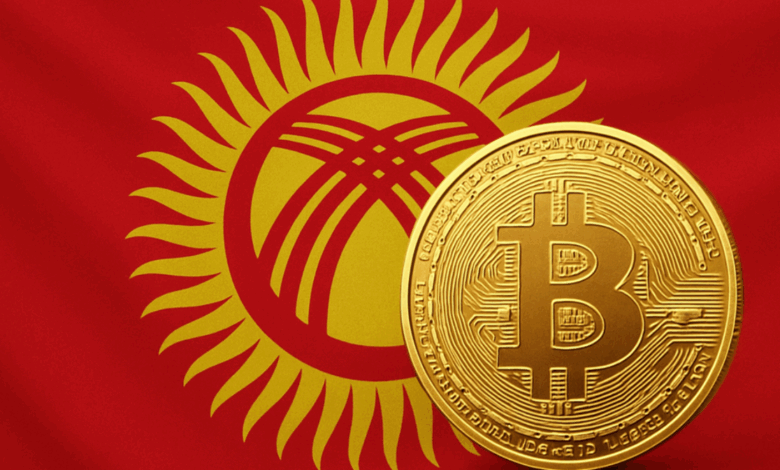
Kyrgyzstan’s Strategic Move Towards a Bitcoin State Reserve and Government-Supported Mining Operations
Kyrgyzstan is making significant strides in establishing a state reserve primarily focused on Bitcoin, alongside government-backed mining operations. This initiative marks a pivotal step in the country’s approach to integrating cryptocurrency into its financial framework.
Kyrgyzstan’s Ambitious Plan for a Bitcoin Reserve and State Mining
Key Developments in the Legislative Process

Advertisement Banner
On September 9, during a session of the Zhogorku Kenesh’s Budget, Economic, and Fiscal Policy Commission, the Minister of Economy and Commerce, Bakyt Sydykov, unveiled amendments to the “Virtual Assets” law. These amendments introduce the concepts of “state mining” and a “state cryptocurrency reserve.” Sydykov explained that the reserve would be established through various channels, including mining, asset tokenization, and issuing stablecoins backed by the national currency. This initiative aims to bolster the country’s financial stability and provide new investment tools.
Financial Insights and Industry Growth
The minister shared data on the burgeoning crypto sector. From January to July 2025, companies operating in Kyrgyzstan’s crypto economy generated over 1 trillion som in revenue, contributing between 900 million to 1 billion som in tax revenues. The official registry now lists 169 exchanges and 11 mining companies, according to Sydykov.
Addressing Energy Concerns
Energy security was a focal point during the commission’s discussions. Deputy Dastan Bekeshev raised concerns, noting that mining one Bitcoin requires approximately 800,000 kilowatts of electricity, enough to power around 1,200 apartments for a month. With winter approaching, he questioned the viability of such energy consumption. In response, Sydykov assured that Kyrgyzstan has designated separate electricity tariffs for mining, which the state will adhere to. He emphasized that no mining farms will be located at thermal plants or the under-construction Kambar-Ata-1 hydroelectric plant. Instead, the capacity of small hydroelectric plants is utilized in this sector, with 17 currently operational and 15 more projects underway.
Market Regulation and Confidence Building
Proposed market reforms include a requirement that, starting January 1, 2026, any cryptocurrency exchange wishing to operate nationally must hold at least 10 billion som in authorized capital. This precautionary measure is deemed essential by the government to enhance market confidence and foster the development of the crypto industry in Kyrgyzstan.
Kyrgyzstan’s Crypto Ambitions in Central Asia: A Race Against Kazakhstan
Strategic Alliances and Geopolitical Implications
This pragmatic approach aligns with previous policy signals. In mid-April, Kyrgyzstan’s National Investment Agency signed a strategic memorandum with Changpeng Zhao, Binance’s co-founder, appointing him as an advisor on national blockchain policy and Web3 strategy. During a visit to Bishkek in early May, Zhao publicly suggested that the country utilize Bitcoin and BNB as initial assets for a national cryptocurrency reserve.
The push towards crypto comes as Kyrgyzstan’s sector gains economic and geopolitical prominence. Increased activity on domestic platforms coincided with Western sanctions scrutiny, including UK and US measures in August targeting entities linked to a ruble-pegged stablecoin network and Kyrgyz companies accused of facilitating Russian sanctions evasion. These pressures prompted President Sadyr Japarov to publicly address Washington and London. The government has refuted the allegations, emphasizing that crypto-related banking operations are under state supervision.
Regional Developments and Competition
Regional dynamics are shifting in parallel. Neighboring Kazakhstan recently proposed establishing a national “crypto reserve fund” as part of the “State of the Nation” plan, which includes a broader digital asset agenda featuring a “CryptoCity” pilot project and new legislation by 2026.
Analyst Daniel Batten highlighted a key distinction from other Bitcoin-interested states, noting that unlike El Salvador, Pakistan, Argentina, and the Central African Republic, Kazakhstan does not have an IMF loan. This absence of financial constraints suggests that Kazakhstan’s initiative may proceed unhindered. Should Astana advance, it will become the second Central Asian state to formally build a digital asset buffer, intensifying regulatory and competitive dynamics in the region.
Commitment to Editorial Integrity
Editorial Process: Our editorial process at Bitcoinist focuses on delivering thoroughly researched, accurate, and unbiased content. We adhere to strict sourcing standards, and each page undergoes meticulous review by our team of top technology experts and seasoned editors. This commitment ensures the integrity, relevance, and value of our content for our readers.