

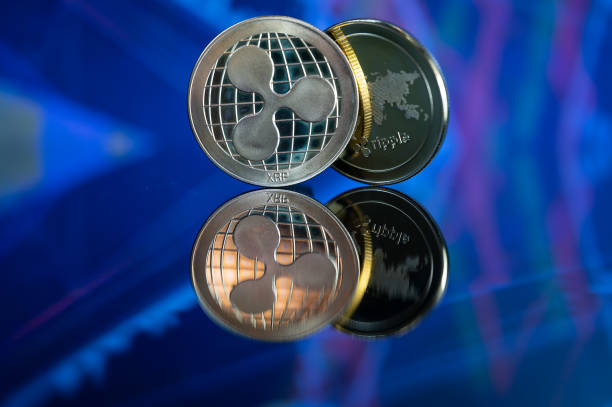
XRP: A Resilient Force in the Cryptocurrency Arena
Our editorial standards emphasize authentic and expertly reviewed content. This article is crafted with insights from industry leaders and seasoned editors dedicated to delivering valuable information.
XRP’s Endurance in the Crypto World
XRP continues to demonstrate its strength and resilience amid criticism, legal battles, and skepticism. Often labeled as a “ghost chain,” XRP is now experiencing significant on-chain activity, particularly during its current consolidation phase where large investors (or “whales”) remain inactive.

Advertisement Banner
XRP Ledger: Debunking the ‘Ghost Chain’ Myth
Contrary to claims that the XRP Ledger (XRPL) is dormant, recent data reveal a surge in daily transactions. The network has seen an average of 819 transactions per day, with each transaction valued at over $280,000. Despite the silence from whale movements, with no notable increase in transactions over $100,000 or $1,000,000 in September, this rise highlights XRPL’s ongoing activity.
These developments occur amidst criticism from Tom Zschach, Chief Innovation Officer at SWIFT. Zschach described Ripple as “a dead chain walking,” arguing that banks require neutral governance and cannot rely on a settlement system governed by a single entity. According to him, despite surviving legal challenges, XRP lacks the neutrality and regulatory assurance essential for widespread global use. Zschach questioned why banks would choose XRP over tokenized deposits and regulated stablecoins, which offer similar benefits without external risks.
The critique echoes a Forbes article from April 2024 that categorized XRPL as a ghost chain and Ripple as “a crypto zombie.” However, the latest data showcasing hundreds of high-value daily transactions challenges this narrative, proving that the XRP chain is still very much alive and attracting users.
XRP’s Innovative Approach vs. SWIFT’s Legacy System
While XRP showcases its vitality, the ongoing competition between Ripple and SWIFT remains a pivotal discussion in modern finance. According to a recent analysis by a crypto expert on X social media, these two entities embody contrasting visions for the future of global money transfers.
For over fifty years, SWIFT has been a cornerstone of international banking, connecting over 11,000 banks in 200 countries. However, it often faces criticism for being slow, costly, and outdated. XRP, on the other hand, offers near-instantaneous, transparent, and affordable cross-border payments. Nonetheless, it contends with challenges regarding regulatory clarity and broad adoption.
Both networks have areas for improvement. Ripple must focus on strengthening institutional trust while navigating a complex regulatory framework. Despite experiencing prolonged legal challenges with the US SEC, XRP remains committed to competing with SWIFT, striving to capture a significant share of the cross-border transaction market.
Conclusion
XRP’s journey in the crypto space reflects its tenacity and adaptability. Despite facing numerous hurdles, it continues to prove its relevance and utility. As Ripple advances in its mission to revolutionize global payments, the ongoing debate between innovative blockchain solutions and traditional banking systems like SWIFT will shape the future of international finance.
Commitment to Editorial Integrity
Our editorial process at bitcoinist is dedicated to producing meticulously researched, accurate, and unbiased content. We adhere to strict sourcing standards, ensuring each page is thoroughly reviewed by top technology experts and seasoned editors. This commitment guarantees the integrity, relevance, and value of our content for our readers.