Bolivia and Algeria: Divergent Paths in the Crypto Landscape
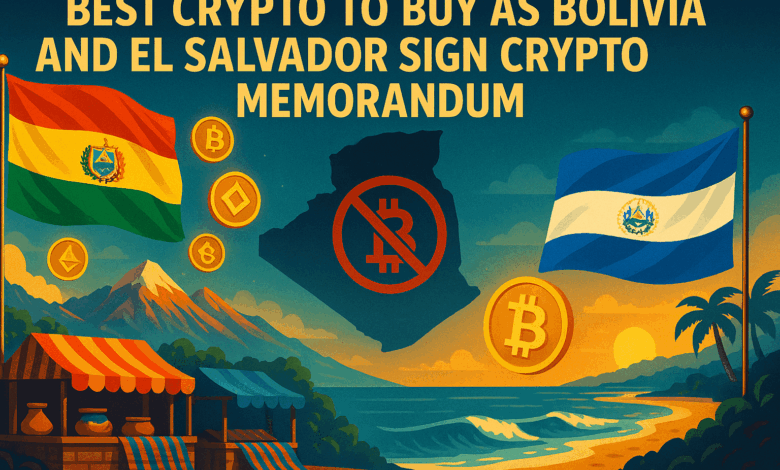
In a dynamic era of digital currencies, Bolivia and Algeria are taking contrasting stances on cryptocurrency regulations. Bolivia has recently ended its decade-long prohibition on digital assets, witnessing a remarkable surge in transactions, which soared by over 500% in just six months, reaching a value of $294 million by April 2024. This ambitious move aligns Bolivia with El Salvador, the pioneering nation that adopted Bitcoin as legal tender, as both countries collaborate to enhance regulatory frameworks, share blockchain insights, and develop market monitoring strategies.
Bolivia’s Progressive Crypto Strategy

Advertisement Banner
Bolivia’s Central Bank (BCB) has forged a strategic partnership with El Salvador’s National Commission for Digital Assets (CNAD), focusing on sharing expertise in blockchain intelligence, risk management, and market oversight. This alliance aims to regulate digital assets while promoting their use for remittances, payments for micro and small enterprises, and as a defense against the depreciating boliviano. With dwindling official dollar reserves, cryptocurrencies provide a vital avenue for cross-border transactions and everyday commerce.
Algeria’s Restrictive Crypto Ban
Conversely, Algeria has chosen a restrictive path. Despite its status as one of the fastest-growing crypto markets in the Middle East and North Africa (MENA) region, the nation has enacted Law No. 25-10, effectively outlawing all cryptocurrency-related activities, from trading and mining to wallet operations. This legislation, effective since July 2025, imposes severe penalties, including imprisonment and hefty fines, signaling a stark contrast to Bolivia’s open embrace of digital currencies.
Implications for Investors
These divergent approaches underscore the profound impact of regulatory shifts on adoption trends and capital flows. As more countries lean towards embracing digital assets, projects with global scalability stand to gain significantly. Investors should watch for opportunities in utility projects like Bitcoin Hyper and Best Wallet Token, which are well-positioned to thrive in evolving markets.
Promising Crypto Projects: A Closer Look
Best Wallet Token ($BEST) – Advancing Web3 Wallets
Best Wallet aims to revolutionize the realm of crypto wallets, targeting a substantial market share by 2026. The Best Wallet Token ($BEST) plays a crucial role in this venture, offering a seamless interface and a suite of features tailored to the Web3 environment. Security is paramount, with Fireblocks’ MPC-CMP technology ensuring institutional-grade protection. Token holders benefit from reduced transaction fees, early access to vetted crypto presales, and governance rights within the expanding ecosystem.
Since its presale launch, $BEST has raised over $14.6 million, with staking rewards reaching an impressive 92% APY. As Bolivia and El Salvador advocate for regulated digital asset adoption, secure and user-friendly wallets become indispensable, especially in emerging markets where cryptocurrencies offer financial stability.
Avalanche ($AVAX) – A Layer 1 Powerhouse
Avalanche ($AVAX) has been gaining traction, boasting a $10.37 billion market cap. Its innovative three-chain architecture addresses the blockchain trilemma, achieving high transaction throughput without compromising decentralization. With increasing adoption, Avalanche has attracted significant institutional interest, including partnerships with prominent entities like BlackRock and Visa.
As Bolivia seeks efficient digital asset infrastructure, Avalanche’s focus on speed, scalability, and interoperability aligns perfectly with cross-border financial applications. For investors, $AVAX represents both a mature Layer 1 platform and a promising opportunity for future growth.
Bitcoin Hyper ($HYPER) – Elevating Bitcoin with Solana Speed
Bitcoin Hyper ($HYPER) emerges as the first true Bitcoin Layer 2 solution, leveraging the Solana Virtual Machine (SVM) to enable sub-second Bitcoin transactions with negligible fees. This integration unlocks new possibilities for Bitcoin holders, from DeFi protocols to instant payments and dApps.
The presale has already raised over $8.3 million, with staking rewards reaching 131% APY. By bridging Bitcoin and Solana, $HYPER aims to become Bitcoin’s execution layer, expanding its capabilities within the Web3 ecosystem. As Bolivia and other Latin American markets embrace cryptocurrencies, such solutions are likely to witness growing demand.
Conclusion: Navigating the Crypto Horizon
Bolivia’s collaboration with El Salvador showcases the potential for emerging economies to leverage cryptocurrency for financial inclusion and stability. In contrast, Algeria’s stringent ban illustrates the unpredictable nature of regulatory environments. For investors, the key lies in supporting projects that can navigate diverse regulatory landscapes, offering secure wallets and innovative scaling solutions.
Disclaimer: This article is not financial advice. Cryptocurrency markets remain volatile, and readers are encouraged to conduct thorough research before making investment decisions.
Editorial Standards
Our editorial process is dedicated to delivering meticulously researched, accurate, and impartial content. We adhere to rigorous sourcing standards, with each article undergoing thorough review by our team of top technology experts and seasoned editors. This commitment ensures the integrity, relevance, and value of our content for our readers.