
Cardano’s Innovative Approach to Privacy-Enabled Stablecoins
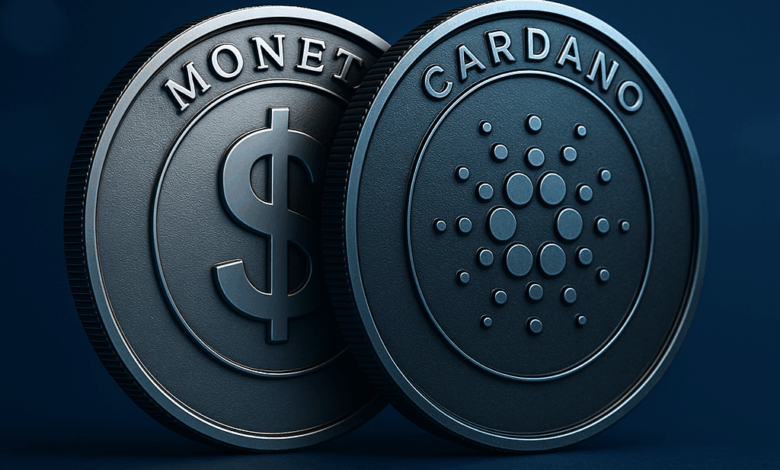
Cardano, under the leadership of its founder Charles Hoskinson, is making significant strides in the realm of regulated, privacy-enhanced digital currencies. On July 31, Hoskinson announced that “Moneta’s USDM is becoming the most advanced stablecoin ever built.” This proclamation followed a comprehensive workshop in Buenos Aires, centered on the development of what he termed the “first Private Stablecoin.”
Unveiling the Future: USDM’s Unique Proposition
Cardano developer Andrew Westberg elaborated on the technical intricacies of a privacy-enabled digital dollar. He emphasized how such a stablecoin could adhere to both enterprise and legal standards without compromising the privacy inherent to blockchain technology. He noted, “The stablecoin is a small but important piece of the discussion in Argentina. That being said, the complexity is 10 to 20 times greater than that of USDM.”

Advertisement Banner
Understanding Cardano’s Role-Based Access Model
Westberg introduced a role-based access model that offers varying degrees of financial visibility. This model allows payroll recipients to view only their payments, accountants to access amounts without personal details, CFOs to see the complete picture, and legal investigators to gain full transparency upon court order. He commented, “This technology is groundbreaking, representing a leap in complexity that could enable blockchain to surpass traditional financial systems.”
Midnight: Cardano’s Privacy Network
Input Output Global’s partner-chain, Midnight, plays a crucial role in this innovation. Midnight is a zero-knowledge privacy network designed to facilitate selective disclosure, allowing developers to meet regulatory requirements while maintaining privacy. The network employs a TypeScript-based language called Compact for smart contracts, offering enterprise-grade programmable data protection.
Moneta’s USDM: A Closer Look
Moneta Digital LLC, on Cardano’s base layer, issues USDM, a fiat-backed stablecoin regulated by federal and state authorities in the United States. Moneta’s reserves are managed by reputable financial institutions such as Fidelity and Western Asset Management.
Expanding Accessibility and Adoption
Moneta has initiated retail minting with a minimum threshold and is available in numerous US states, underscoring the gradual nature of state licensing. According to DeFiLlama, approximately $12 million USDM is currently in circulation on Cardano.
Privacy-Enhanced Instruments for Midnight
Meanwhile, a privacy-preserving instrument, ShieldUSD, is under development for Midnight. This fiat-backed privacy stablecoin, issued by Moneta and built by W3iSoftware, aims to offer granular permissions and interoperability with public ledgers. While the final product details are evolving, the direction is clear: a dollar with privacy features designed to function natively on a privacy chain.
The Debate on Complexity vs. Necessity
Westberg’s insights sparked a debate within the community about whether the complexity of such a system is justified compared to existing public stablecoins. Critics suggested that USDC might be a better fit, while Westberg argued that USDC lacks the advanced privacy capabilities necessary for certain use cases, such as private utility payments or compliant remittances.
Balancing Privacy and Regulation
The privacy layer is primarily scoped to Midnight. Once assets move from Midnight to public chains, privacy is lost, even though the instrument remains interoperable with other stablecoins for liquidity. This trade-off aligns with Midnight’s selective disclosure model, potentially easing regulatory concerns by allowing investigatory access with a court order.
Argentina: A Strategic Stage for Cardano
Hoskinson’s choice of Buenos Aires as the venue is significant. Argentina has been a focal point for Cardano’s governance and adoption efforts. The Buenos Aires workshop marks a milestone in the journey toward a “first Private Stablecoin,” reflecting a commitment to combining compliance with confidentiality in a country where stablecoins are integral to the economy.
Future Prospects and Challenges
For Cardano and Moneta, the immediate goals include expanding licensed jurisdictions, increasing USDM’s fiat reserves, integrating with Cardano DeFi venues, and demonstrating that programmable privacy can seamlessly integrate into existing financial workflows. The long-term challenge lies in achieving market acceptance and scaling USDM’s supply while proving the viability of privacy-enhanced stablecoins in real-world compliance scenarios.
As of the latest update, Cardano (ADA) is trading at $0.72. The ecosystem is now tasked with realizing the potential of Moneta’s USDM as the most advanced stablecoin, as asserted by Hoskinson. Whether this architecture can deliver on its promise in practice remains to be seen.
Our Editorial Commitment
Our editorial process prioritizes delivering thoroughly researched, accurate, and unbiased content. Our team of top technology experts and seasoned editors ensures each page undergoes rigorous review, maintaining the integrity, relevance, and value of our content for our readers.