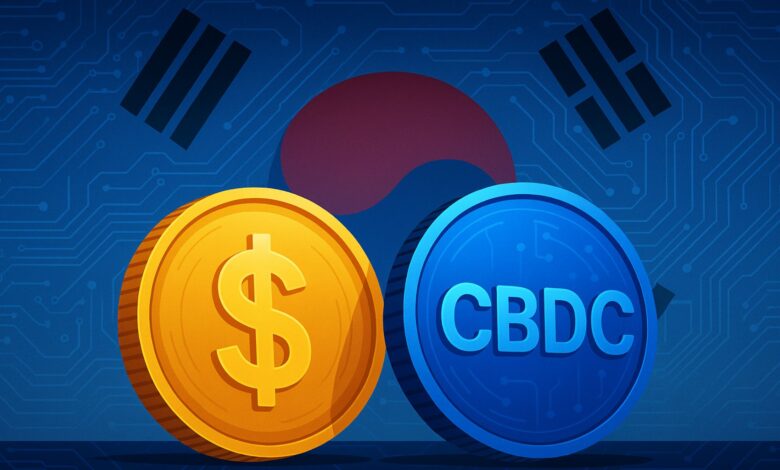
South Korea’s Strategic Move Towards Digital Currency Innovation
South Korea is making significant strides in its oversight of stablecoins and the advancement of digital currencies. According to a report by Yonhap News dated July 29, the Bank of Korea has introduced a new virtual asset division within its Financial Settlement Bureau. This newly established division will oversee the broader cryptocurrency market and spearhead internal discussions focused on the development and regulation of stablecoins tied to the Korean won.
Reforming Structures for Enhanced Digital Currency Development
As part of a comprehensive organizational overhaul, the central bank will rebrand its Digital Currency Research Lab to the Digital Currency Lab starting July 31. This change reflects a shift from pure research towards more business-centered development. Furthermore, the former Digital Currency Technology Division will be restructured into two distinct units: the Digital Currency Technology Team and the Digital Currency Infrastructure Team. These teams will concentrate on privacy-preserving technologies, deposit-token platforms, and testing environments for stablecoin usability.

Advertisement Banner
This organizational change underscores South Korea’s intensifying commitment to becoming a leader in digital currency innovation. With stablecoins and central bank digital currencies (CBDCs) gaining traction globally, the Bank of Korea appears to be aligning its internal structures for a proactive, policy-driven role in the future of finance.
Bank of Korea’s Renewed Focus on Stablecoin Development
A Bank of Korea official clarified the rationale behind renaming its Digital Currency Research Lab to the Digital Currency Lab, emphasizing the intent to expand the unit’s role beyond research. This renaming highlights the central bank’s desire to align the unit with broader operational and policy-driven goals. Despite this change, the official noted that the core functions of the department will largely remain unchanged.
The Digital Currency Lab, which emerged from the Research Department earlier this year, is at the forefront of South Korea’s central bank digital currency (CBDC) initiatives. A notable project under its purview is “Project Han River,” a long-term initiative aimed at testing the practical usability of a digital won. Although the first phase concluded successfully recently, the second phase has been postponed due to concerns from participating banks regarding the lack of a detailed long-term plan and the financial implications of ongoing participation.
Despite this temporary halt, Bank of Korea Governor Lee Chang-yong emphasized in a July 10 press conference that Project Han River aims to “safely introduce a won-denominated stablecoin.” He further stated, “Whether it’s a won stablecoin or a deposit token, digital currency is essential for the future.”
This aligns with a significant trend in global finance: the rapid adoption of stablecoins beyond the US. South Korea’s evolving framework underscores the growing significance of national stablecoin initiatives as countries strive to modernize payment systems and maintain control over their digital financial infrastructure.
Stablecoin Market Trends: Analyzing USDT and USDC Dominance
The combined market dominance of USDT and USDC currently stands at 5.96%, according to recent data. This figure reflects a neutral stance in stablecoin capital positioning, having declined from a peak of over 18% in early 2022 during a period of heightened risk aversion. The gradual decline indicates a shift of capital from stablecoins back into riskier assets.
The weekly chart reveals that USDT and USDC dominance has consistently struggled to maintain levels above several key moving averages: 50-week (6.57%), 100-week (6.93%), and 200-week (8.38%). Recent price movements confirm resistance near these levels, with dominance now testing its mid-cycle support around the 6% threshold.
This downtrend typically indicates an increasing risk appetite, as capital rotates from stablecoins into more volatile assets like Bitcoin (BTC), Ethereum (ETH), and other altcoins. However, the fact that dominance has not fallen below 5% suggests a market that remains cautious, retaining a substantial base of sidelined capital.
Editorial Integrity at Bitcoinist
The editorial process at Bitcoinist is dedicated to providing content that is thoroughly researched, accurate, and unbiased. We adhere to strict sourcing standards, and each page undergoes a meticulous review by our team of leading technology experts and seasoned editors. This rigorous process ensures the integrity, relevance, and value of our content for our readers.