

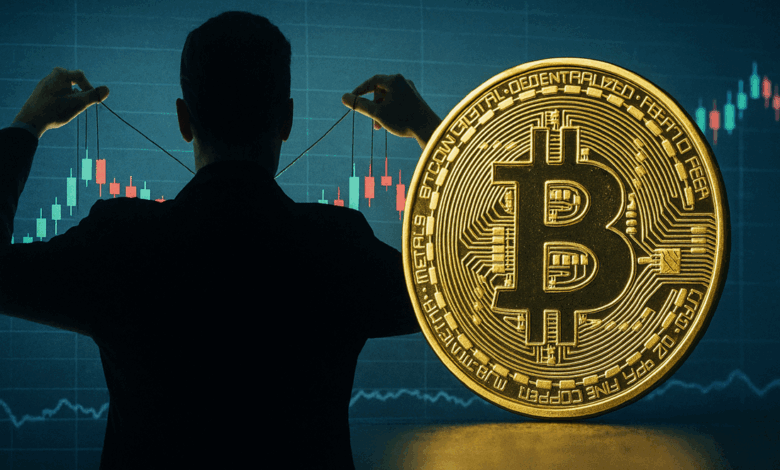
Unraveling Bitcoin Price Myths: Separating Fact from Fiction
Bitcoin has always been the subject of speculation and debate, particularly surrounding its value and alleged price manipulation. Recently, James “Checkmate” Check, a well-respected analyst from Check on Chain, provided insights into these claims during an appearance on the G’day Bitcoin podcast. His perspective challenges the popular conspiracy theories, suggesting that what many perceive as price suppression is actually a natural part of market behavior.
Understanding Bitcoin Price Movements
Is Bitcoin’s Price Being Manipulated?

Advertisement Banner
Checkmate argues that the main reason Bitcoin’s price seems stagnant is not due to manipulation, but rather market participants’ lack of excitement. He emphasizes that the notion of price suppression, often hinted at by frustrated investors, overlooks the fundamental principles of trading: for every buyer, there has to be a seller.
Critics frequently point out substantial purchases by significant players, like Strategy, wondering why these do not lead to price surges. Checkmate’s straightforward explanation is that these large transactions are counterbalanced by equally large sell-offs. The market’s equilibrium, therefore, is maintained through this natural exchange.
The Misunderstanding of Market Dynamics
The misconception about price suppression, according to Checkmate, is rooted in a lack of understanding of liquidity absorption in markets. He explains that the expectation for immediate market movement after a buy order is a misunderstanding of market mechanics. In reality, buyers like Saylor prefer stability before the market reacts, which is a standard practice.
This period of market stagnation, or “chop-solidation” as Checkmate describes it, is a healthy process where the market consolidates previous gains. The term combines technical consolidation with the Choppiness Index, a tool that assesses market volatility. This phase is a natural pause, especially after the aggressive rally that followed the post-FTX lows, and is not indicative of manipulation.
The Psychological Aspect of Manipulation Theories
Checkmate believes that the persistence of manipulation theories is psychological. Investors, bored by the lack of dramatic price changes, create these narratives. He compares the current climate to past phases where similar patterns of alleged manipulation were eventually disproven by market rallies.
He suggests that the real issue lies in investors’ emotional responses rather than actual price fluctuations. The proximity to all-time highs often leads to emotional volatility, with the market either surging unexpectedly or dipping slightly to trigger panic—only to rebound strongly afterwards.
The Importance of Chop-Solidation
According to Checkmate, the cycle of consolidation, panic, and eventual breakout is typical and necessary. Inventing sinister motives is unnecessary when the market is simply following its natural course. Experienced Bitcoin enthusiasts recognize this as a recurring pattern.
His message aims to temper emotional reactions, emphasizing that “chop-solidation” is an essential market process. Rather than being orchestrated by institutions to buy low, Bitcoin’s range-bound behavior is a sign of the market setting the stage for its next significant move.
In conclusion, Checkmate’s analysis dispels the notion of manipulation, highlighting that the perceived suppression of Bitcoin’s price is due to collective impatience rather than centralized control. The market isn’t rigged—it’s merely pausing before its next move.
Current Market Snapshot
At the time of this analysis, Bitcoin is trading at $101,940, reflecting the ongoing stabilization phase.
Commitment to Editorial Integrity
Our Editorial Process ensures that we deliver content that is thoroughly researched, accurate, and unbiased. Adhering to strict sourcing standards, each article undergoes meticulous review by top technology experts and seasoned editors. This rigorous process guarantees content integrity, relevance, and value, ensuring our readers receive the highest quality information.