
Cardano’s Vision for Blockchain’s Future: A New Era of Collaboration and Integration
Our editorial team at Bitcoinist is dedicated to providing readers with meticulously researched, precise, and unbiased content. We adhere to rigorous sourcing standards, ensuring each piece is reviewed by leading technology experts and seasoned editors. This commitment guarantees the integrity and value of our content.
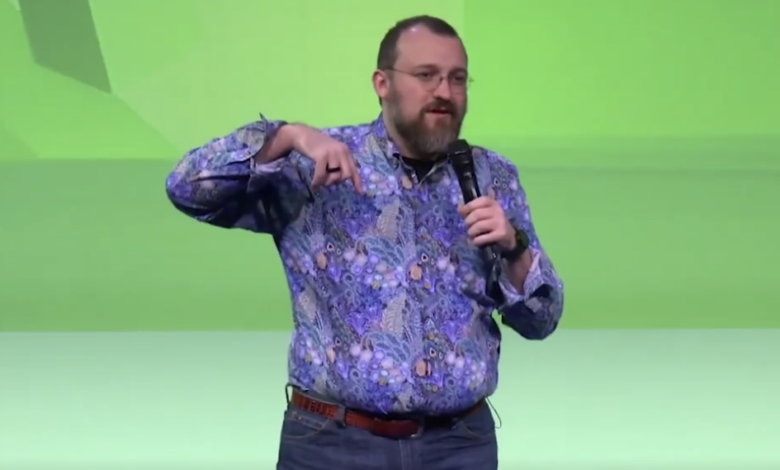
Charles Hoskinson’s Keynote at Paris Blockchain Week

Advertisement Banner
At the prestigious Paris Blockchain Week, Cardano’s founder, Charles Hoskinson, offered a visionary keynote address, emphasizing the critical transition of blockchain into what he terms its “fourth generation.” According to Hoskinson, this evolution demands cooperation across competing protocols, suggesting that only through such cross-chain collaboration can decentralized finance truly supplant traditional financial systems.
Cardano’s Multi-Chain Vision
During his address, Hoskinson captivated the audience with plans for a significant upcoming airdrop, targeting users across eight different blockchain networks. He stated, “In the coming months, we will initiate an airdrop, reaching 37 million people across eight networks.” This initiative includes Bitcoin, Ether, Cardano, XRP, Solana, and others, offering each participant a share of the distribution.
The Evolution of Blockchain
Hoskinson delved into the historical roots of blockchain technology, tracing its origins to the cypherpunk movement and the inception of Bitcoin as the “first generation” of blockchain. He lamented that the blockchain space still battles centralization risks and regulatory challenges, pointing to financial crises and erratic economic policies as reasons for the necessity of blockchain and cryptocurrencies.
Decentralization and Real-World Assets
Advocating for decentralization, Hoskinson stressed the importance of distributing power to the “edges,” thereby preventing concentration among a few economic actors. He predicted a surge in real-world asset integration, stating, “About $10 trillion to $13 trillion will flow into crypto from real-world assets.” He emphasized that privacy on-chain will facilitate compliance, bridging traditional finance (TradFi) with decentralized finance (DeFi).
Privacy and Identity in Blockchain
Hoskinson highlighted the limitations of current blockchain systems and called for a renewed focus on privacy and identity—crucial components for mainstream adoption. He queried, “If you own a restaurant, would you want the public to know how much money is in your cash register?” Emphasizing the need for privacy, he argued that it should be integrated at the protocol level, avoiding reliance on third-party servers, which could compromise decentralization.
The Fourth Generation of Blockchains
Hoskinson described the fourth generation of blockchains as a model of unity, where cooperation surpasses competition among protocols. He introduced ‘Midnight,’ an initiative aimed at achieving interoperability across various chains, addressing compliance and privacy without necessitating users to leave their current networks. “Chain abstraction is essential, allowing users to leverage capabilities without shifting network effects,” he explained.
The Minotaur Consensus Protocol
Hoskinson detailed the consensus protocol for Midnight, known as Minotaur, which integrates multiple networks into a shared security framework. “Minotaur unites all chains. Is it Proof of Work? Proof of Stake? Proof of History? It encompasses everything,” he said. This multi-resource consensus protocol provides block rewards to various networks simultaneously, enabling Bitcoin miners, Ethereum validators, and others to participate without leaving their home chains.
Avoiding Adversarial Scenarios
Hoskinson argued that this approach avoids “intrinsically adversarial” situations, implying that many inefficiencies in crypto stem from zero-sum mentalities among token communities. He concluded by addressing the formidable competition from tech giants, which, equipped with regulatory clarity, could integrate crypto services into their platforms. “Does it make sense to confront a behemoth with trillions of dollars and vast technical resources?” he asked, advocating for inclusive technologies that promote mass adoption while preserving decentralized principles.
Cardano’s Market Position
As of the latest update, Cardano is valued at $0.6254, remaining below a critical resistance zone. This reflects ongoing market dynamics and Cardano’s strategic positioning in the evolving blockchain landscape.